
The Bogotá Brief [2026] Investor’s Guide to Colombia’s Capital 🇨🇴
Of the six largest economies in Latin America, Bogotá is the cheapest capital city per square meter. That makes little sense on paper, yet you can still buy in its best zones for a fraction of what the same apartment costs in Mexico City.

Author
Jake Nomada
Published
Jul 17, 2026
Read time
17 min read
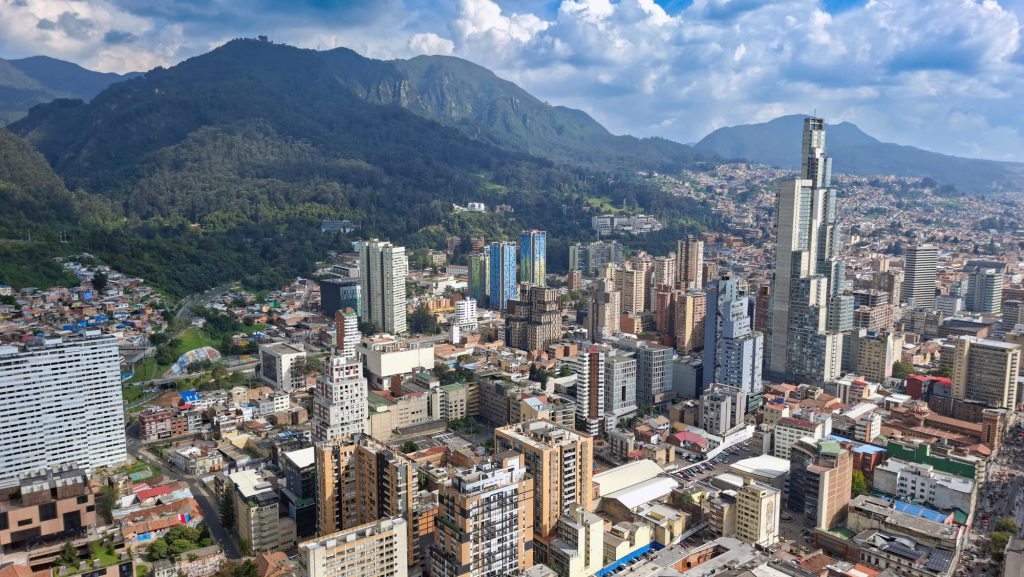
I first wrote about Bogotá years ago. I’ve spent over a year of my life in the city.
Back then, I called it one of the best-connected cities in Latin America, with potentially the best neighborhood on the continent. I wasn’t thinking about investments and cap rates at the time. I was thinking about how easy life gets when everything you need sits within a 10-15 minute walk from your apartment.
Years later, the investment case caught up.
Of the six largest economies in Latin America, Bogotá is the cheapest capital city per square meter.
That makes little sense on paper. This is a city of ten million people and the economic center of a country of 52 million. Its airport moves more cargo than any other in Latin America. You can still buy in its best zones for a fraction of what the same apartment costs in Mexico City or Santiago, Chile.
But why?
The discount exists for many reasons, two of the more important ones are: politics and the peso.
In 2026, both factors are rapidly changing the equation here in Bogotá. See, the Petro era is ending, and the peso has gained roughly 24% against the dollar over the past twelve months. Every month it strengthens, a dollar buyer pays more for the same apartment, even when local prices sit still. The 2023 and 2024 deep discount already went to the buyers who moved early. Dollar prices have been climbing for over a year now.
So, does Bogotá still make sense as an investment?
Well, Bogotá might makes sense if you want rental income in a market locals still dominate, and you can live with Colombian political noise.
Plus, Airbnb absolutely works here. It’s just a different game than Medellín. Your guests are Western remote workers settling in for a few months, corporate consultants on multi-week projects, and a steady flow of Latin Americans flying in for business, family, and everything in between.
Medellín’s short-stay market runs overwhelmingly on Western men. Bogotá’s runs on everyone, which makes the demand far more durable than the city’s reputation suggests. Nobody visits for the weather (though it’s not as bad as advertised), the beach is 1,000 kilometers away, and the bookings still come anyway.
If you’re after beach-town Airbnb hype or a sunny lifestyle purchase, this isn’t your city. For everyone else, below you’ll find: best neighborhoods to buy, what it costs, what it returns, and what can go wrong.
Why Bogotá, Colombia? | The Connected Capital
When I wrote about Bogotá back in the day, my argument was about lifestyle. Everything you need within a short walk, and a world-class airport 30 minutes away when you need to leave.
Years later, the same features are the investment case. Here’s how each one converts:
- The airport helps. El Dorado was ranked the number one airport in Latin America by ACI-LAC in 2024, across passengers, cargo, and aircraft movements. In 2025 it still led the region in cargo and total flights while moving 45 million passengers, second only to São Paulo. Nonstop flights to Miami, New York, Madrid, Mexico City, São Paulo. What matters for you is that it sits 30 minutes from every neighborhood in this guide. Your corporate tenant lands Monday morning and sleeps in your apartment Monday night. That shows up directly in midweek occupancy, the hardest nights to fill in most markets.
- Logistics is the lifestyle, and it’s why guests stay longer. A remote worker who lands in Bogotá finds fast internet, gyms, coworking, cafes, and a supermarket within a few blocks of their rental. Rappi delivers anything in under 20 minutes. When daily life requires zero friction, a two-week trial turns into a three-month stay. Longer stays mean fewer turnovers and fewer gap nights between bookings, which is where short-stay margins actually die. The comfortable lifestyle is what retains the guest.
- Walkability is a rental filter. The zones in this guide, Chapinero up through Zona G, Zona T, El Virrey, Parque 93, and Chicó Norte, sit on one walkable (during the day) 10-kilometer corridor. In a city of ten million with real traffic, “I can walk to dinner” is the single biggest premium a tenant will pay for. It also keeps the investable map small enough to actually understand. You can tour every zone worth your money in one day on foot and a couple of short Ubers. Try that in São Paulo. Errr, maybe not.
- Restaurants and nightlife keep the calendar full. Bogotá has the deepest restaurant scene in Colombia and nightlife that runs seven days a week, because ten million residents plus every Colombian who moved here for work or university need somewhere to go. For your rental, that’s the difference between a consultant flying home Friday and extending through the weekend.
- Traveler diversity is the stability play. Beach towns and nomad hotspots run on one guest type, and when that segment cools, the whole market feels it. Bogotá stacks corporate travel, remote workers, Latin American business and family visitors, medical stays, and domestic traffic on top of each other. No single segment dominates, so no single downturn empties your calendar. As long as Colombia’s capital keeps functioning, the demand shows up, and capital cities are hard to turn off.
And for what it’s worth, the city is finally building its first metro line along this same corridor, roughly 80 years after the first proposal.
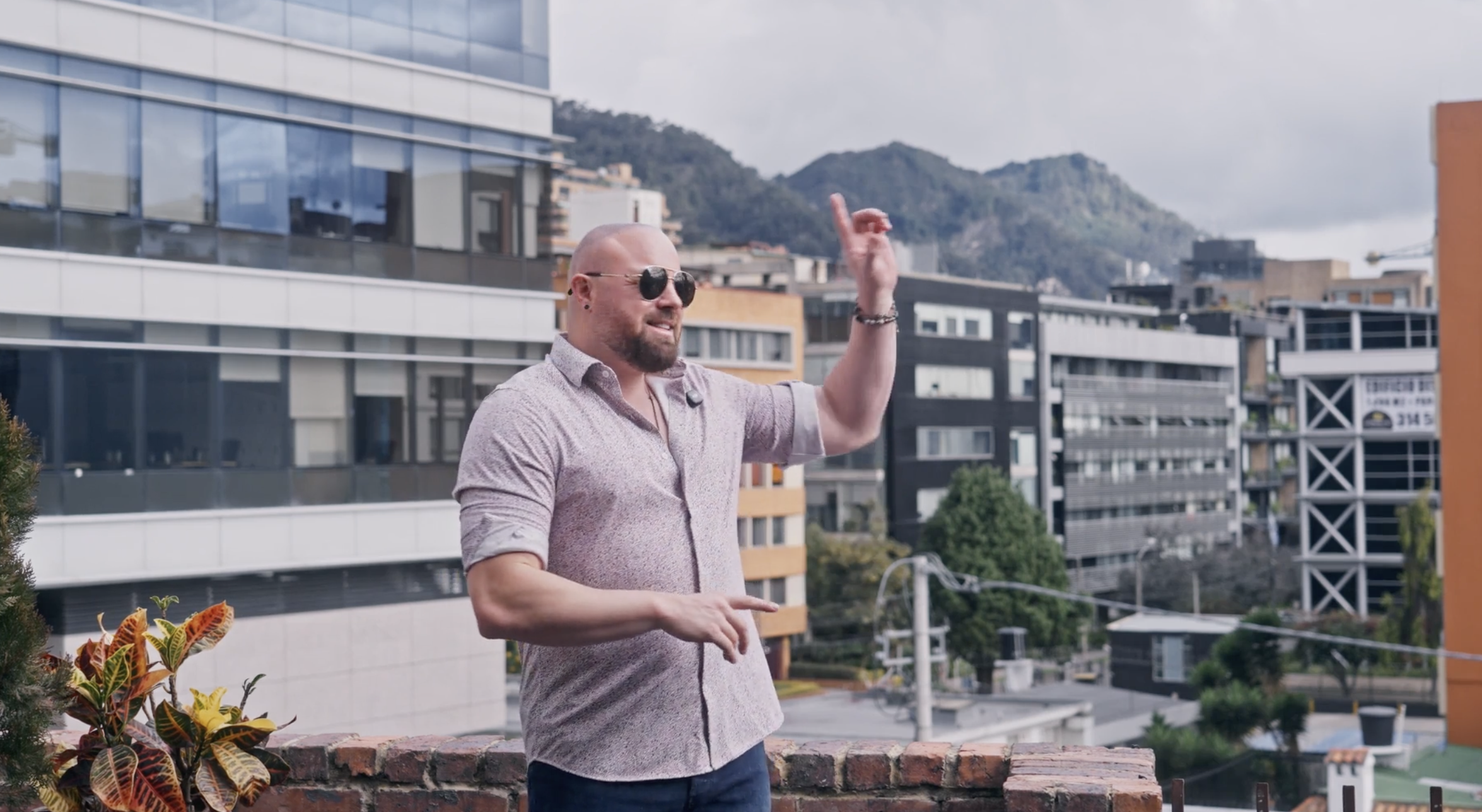
Politics and the Peso | Is the Discount Closing?
Colombia just had its most consequential month in years, and the numbers tell the story faster than I can.
Let’s start here…
Colombia in six numbers 🇨🇴
- GDP growth 2025: 2.6%
- Inflation, year-end 2025: 5.1%, the sixth straight year above the central bank’s target
- Peso vs. the dollar, past 12 months: roughly +24%
- New president: Abelardo de la Espriella, inauguration August 7, 2026
- His runoff margin: under one percentage point
- Bogotá price per m², investable zones: roughly $1,500 to $2,000, against a regional average near $2,400
Colombia just made the political turn that investors spent four years waiting for. On June 21, Abelardo de la Espriella, a right-wing lawyer and businessman who ran on security and a pro-business platform, won the presidency over Iván Cepeda of Petro’s Pacto Histórico. He takes office on August 7, 2026. The Petro experiment that spooked foreign capital in 2022, with its talk of halting oil exploration and taxing wealth, ends this month.
Markets saw it coming.
The peso spent the past year climbing from above 4,000 per dollar to around 3,250, one of the strongest currency runs in the world over that stretch. A weak dollar helped, but most of that move is Colombia repricing its own politics.
For a dollar buyer, the math is simple and a little uncomfortable. You missed the cheapest entry. Whoever bought in 2023 or 2024 got Bogotá at 4,300 pesos (or better) to the dollar with maximum political fear priced in, and that trade is finished.
The question now is whether you’re buying the early stage of a normalization, the way buyers in Buenos Aires did in 2024 before Argentine property repriced upward, or whether you’re late.
My honest read: we might not be too late.
Bogotá home prices rose 5.7% in pesos in 2025 while the currency moved 24%, so nearly the entire adjustment so far has happened in the exchange rate. The repricing of the real estate itself, driven by confidence and foreign demand returning, tends to come after inauguration, not before.
Two caveats, though.
First, this was not a mandate. De la Espriella won by fewer than 300,000 votes out of 26 million cast, and nearly half the country voted for the left. Colombia’s polarization did not end on June 21; it got a new referee. Congress is fragmented, and the security problem he campaigned on is genuinely hard to fix. Untested outsider presidents disappoint as often as they deliver.
If his government stumbles early, part of that 24% currency gain can unwind fast, and your dollar entry improves while your thesis weakens. The peso reacts to Colombian politics faster than any poll.
Second, the strong peso cuts both ways, and which way it cuts for you depends on what happens after you enter. If the peso keeps strengthening, your entry was smart and your asset appreciates in dollars without local prices moving at all. If the peso gives some back, your entry looks expensive in hindsight, though your eventual exit likely lands somewhere in between. Some investors who get hurt in Colombia are the ones who treat the FX as background noise instead of a good percentage of the trade.
The discount that made Bogotá interesting among dollar investors is closing from both directions, currency and confidence. So don’t chase. Get selective, especially about the neighborhood instead, which is exactly where we go next.
P.S: Espriella is also dual citizen of Colombia and the USA, which should help boost relations with the United States – potentially making Bogotá, and all of Colombia, a safer investment.
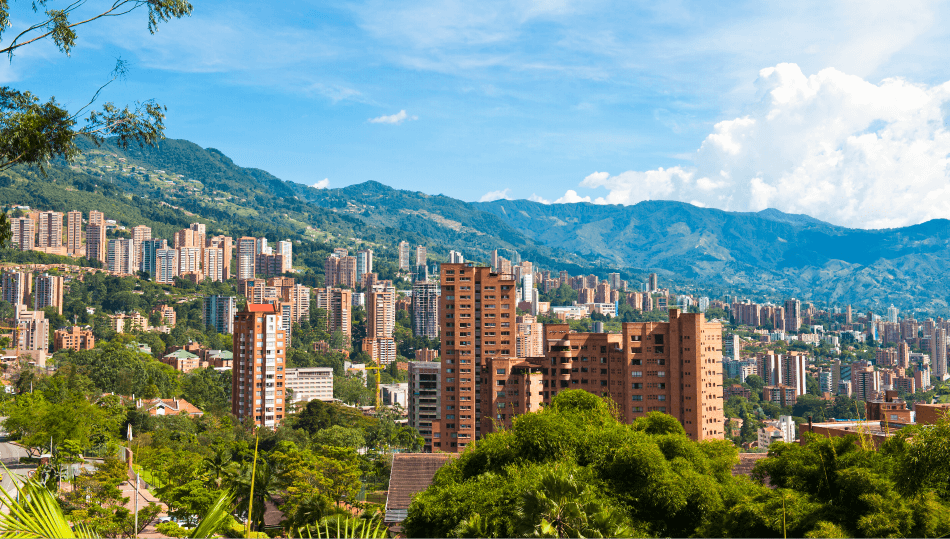
The Neighborhoods That Matter in Bogotá, Colombia 🇨🇴
Years back I called Zona T the best neighborhood in Latin America.
I stand by it, but “best to live in” and “best to buy in” are different questions, and the answer to the second one depends on a number of factors, including who your ideal tenant is.
Luckily, Bogotá is easier to read than its size suggests.
The city runs along the base of the Andes, with the mountains walling off the east, and money in Bogotá has always flowed north along that wall. The result is one spine:
Carrera Séptima and the avenues beside it, running roughly ten kilometers from Chapinero up to Usaquén.
Everything an investor cares about hangs off that strip. The universities and the financial district anchor the south end while the corporate towers and embassies sit at the north, with the restaurants and nightlife filling the stretch between them. West of the corridor the city turns local fast, and to the east you run out of city and into the mountain.
One piece of local vocabulary before we dig in:
Every block in Bogotá carries an estrato, a government rating from 1 to 6 that was designed to set utility subsidies and ended up defining the city’s social map.
Everything in this guide sits in estratos 4 through 6. It matters to you for two reasons: the estrato drives your utility costs as an owner, and locals read it as shorthand for what a block is. Two buildings a street apart can carry different numbers. We’ll get into what that does to your operating math in the taxes section. For now, when a listing says “estrato 6,” understand that as a rating of the street around the building, and one the whole market prices off.
Now, here’s the corridor from south to north:
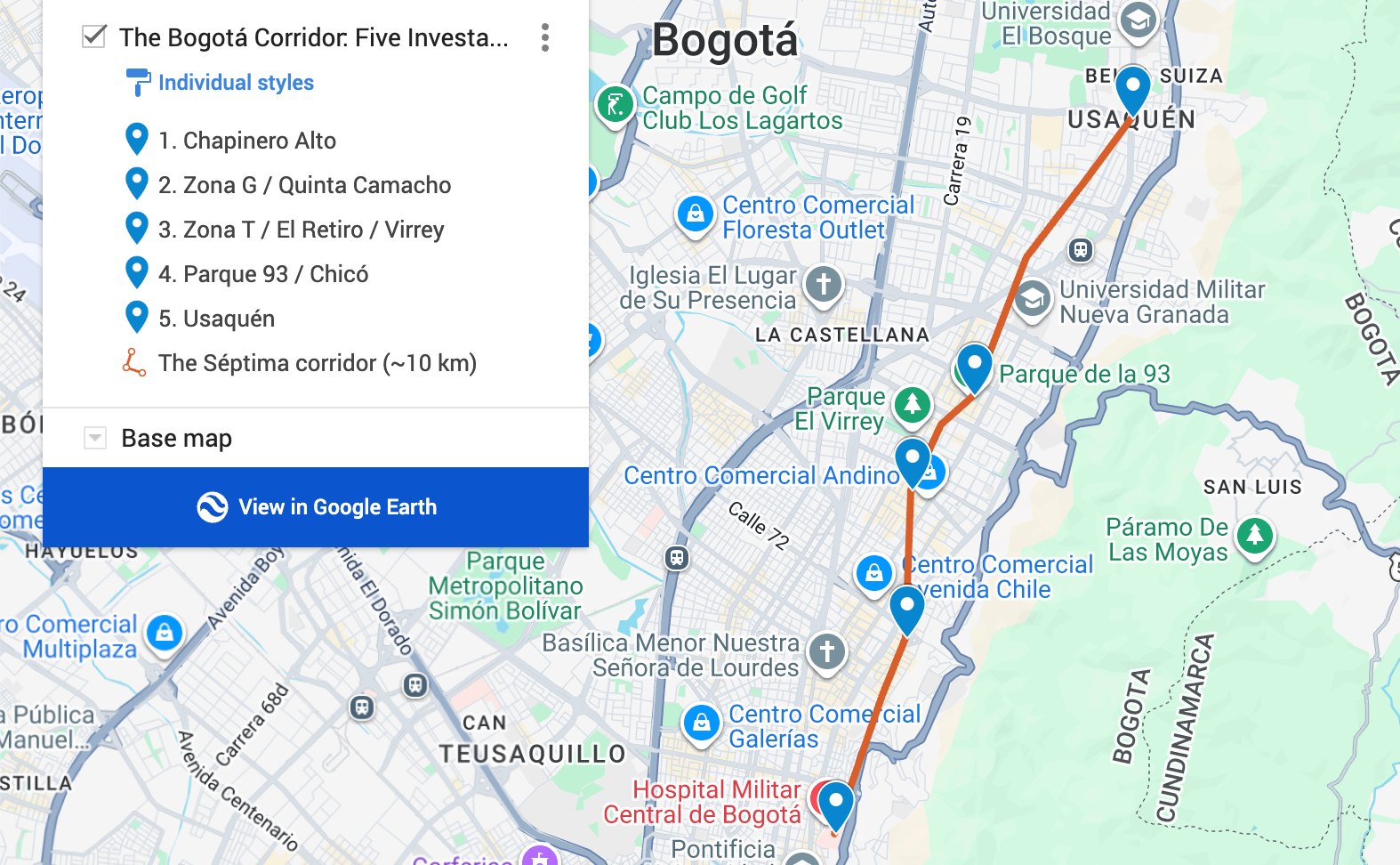
Let’s take a look at each of these barrios and dig deeper here.
Do note: numbering indicates south to north, not best investment opportunity…
#1. Chapinero Alto
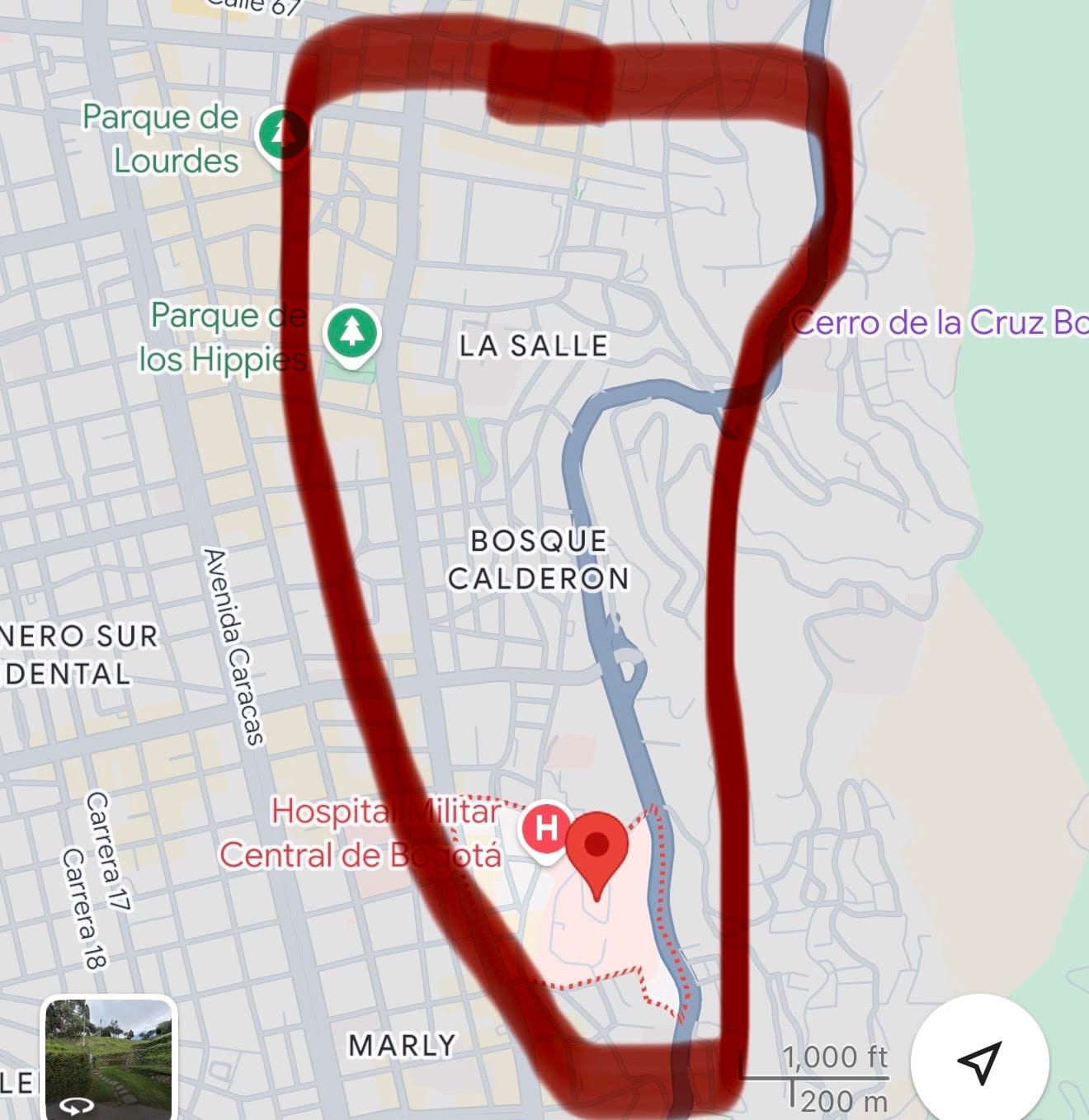
Up the hill from Carrera Séptima, between the universities and the financial district, this is where young professionals and grad students want to live and where remote workers land when Zona T prices scare them.
Be precise about geography here: Chapinero Alto, east of the Séptima and climbing toward the mountains, can be a different world from lower Chapinero around Avenida Caracas, which I found a bit sketchy when I lived in the area years ago. It’s improved of course, but Chapinero Alto is preferable still.
Used apartments run roughly COP 6 to 9 million per m², call it $1,850 to $2,750. Rentals skew long-stay and furnished mid-term.
Verdict: one of the better rent-to-price ratios in this corridor, worth investigating.
What about the rest of Chapinero?
The central blocks west of the Séptima toward Caracas are the cheapest entry on this corridor, and the neighborhood’s gentrification story is real. It’s also the roughest part of the strip. The tenant pool is more price-sensitive, and when you sell, the pool of buyers thins out with it. It’s a block-by-block trade for people who know the city well. If that’s not you yet, Alto is the version of this bet with a floor under it.
#2. Zona G and Quinta Camacho
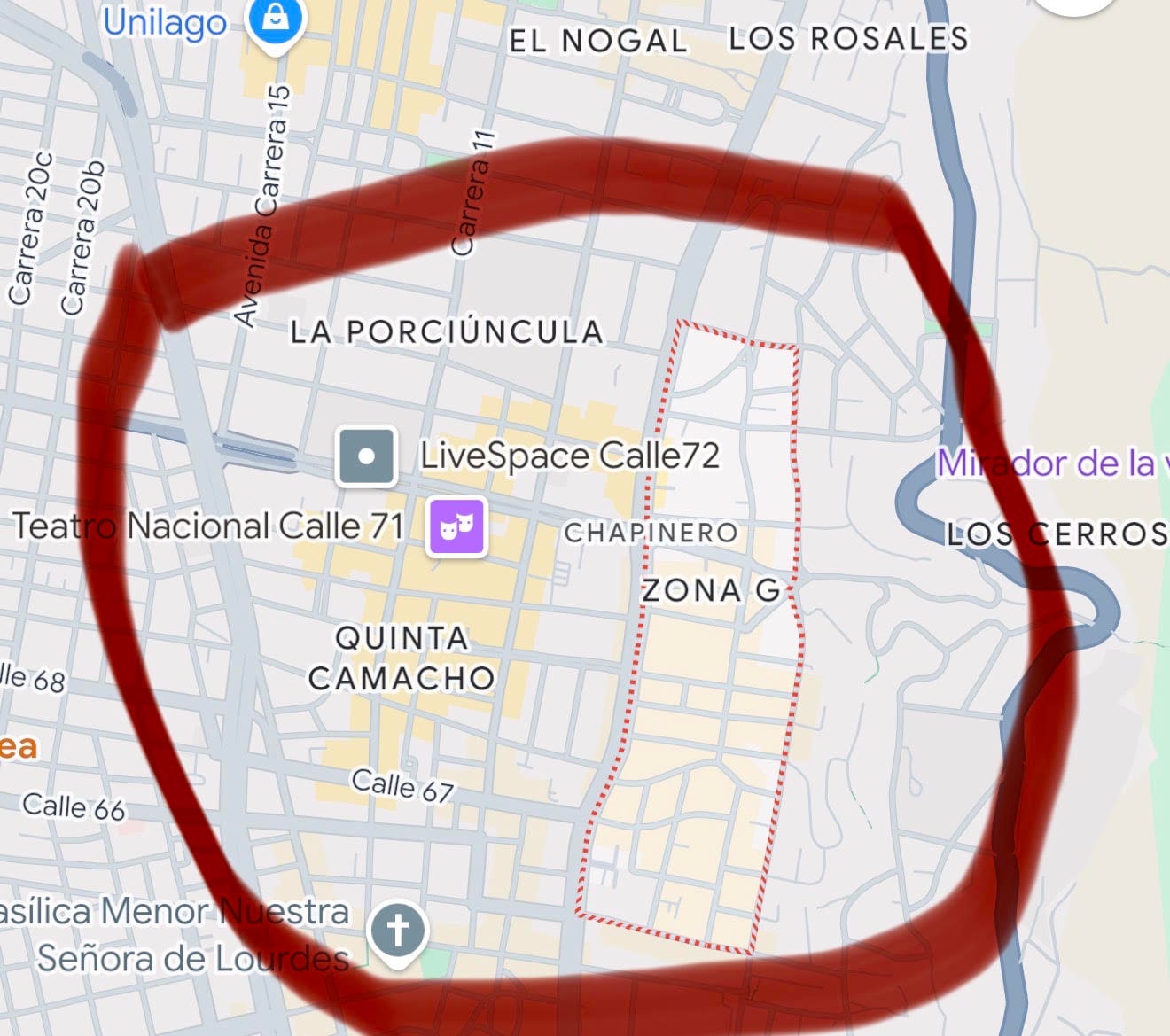
The boutique play. Bogotá’s restaurant row plus the prettiest brick architecture in the city, English-style townhouses that survived the demolition waves. Small supply, constant demand from food-and-design types, consulates, and boutique offices.
Apartments run roughly COP 7 to 11 million per m². Short and mid-stays perform here because guests pay for the walk-to-dinner life.
Verdict: buy the charm if you can find it at the right price; inventory is the constraint, not demand.
#3. Zona T, El Retiro, and Parque Virrey
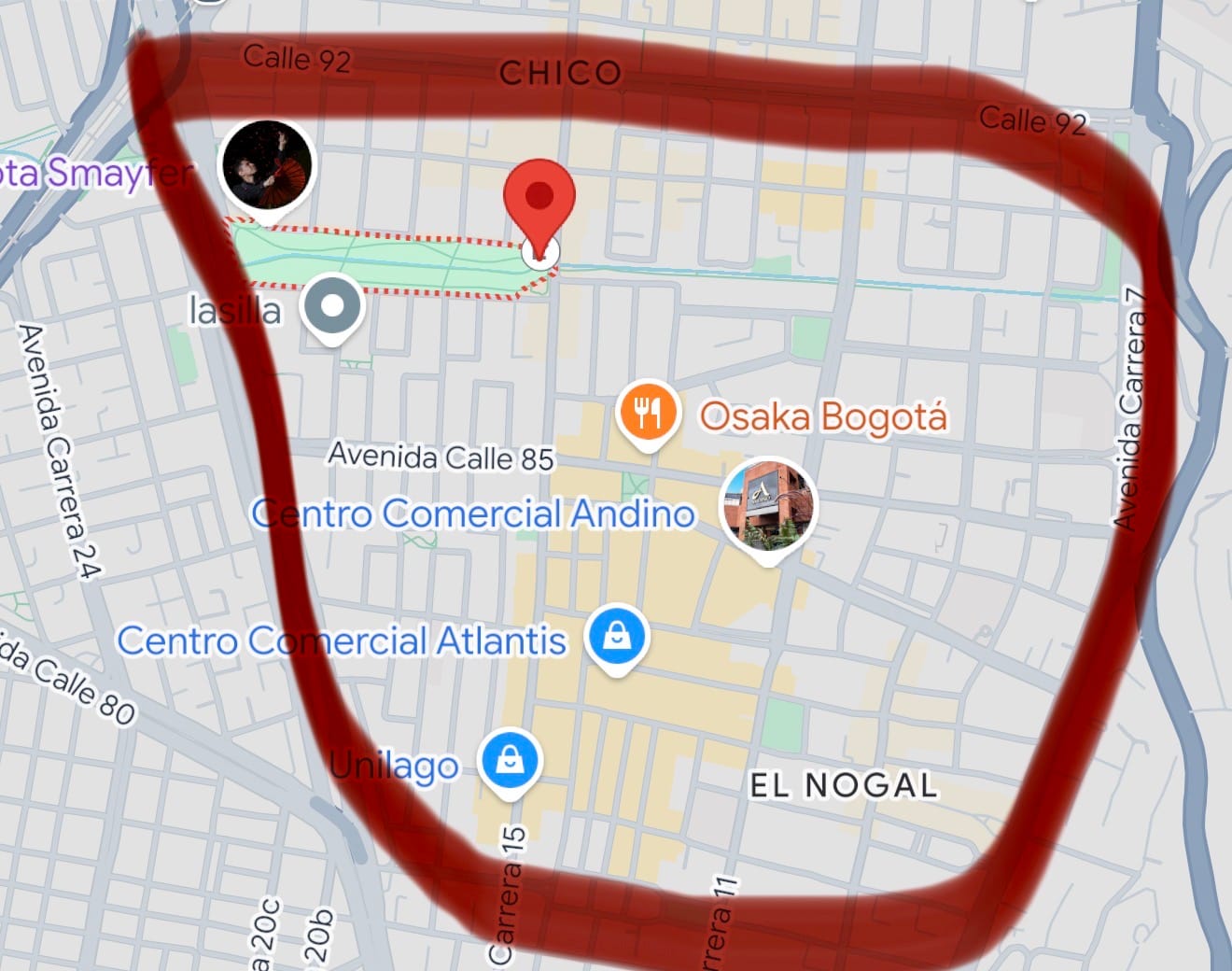
The prime cut. Parks, malls, gyms, the best bars and clubs in the country, a private hospital, and all of it walkable.
This is where I told lifestyle readers to stay years ago, and it’s where the highest nightly rates in the city live. You pay for it: used stock roughly COP 8 to 12 million per m², new projects well above.
Verdict: the strongest short-stay zone in Bogotá, and the entry price already knows it. Buy here for rate and liquidity, not for a bargain.
#4. Parque 93 and Chicó Norte
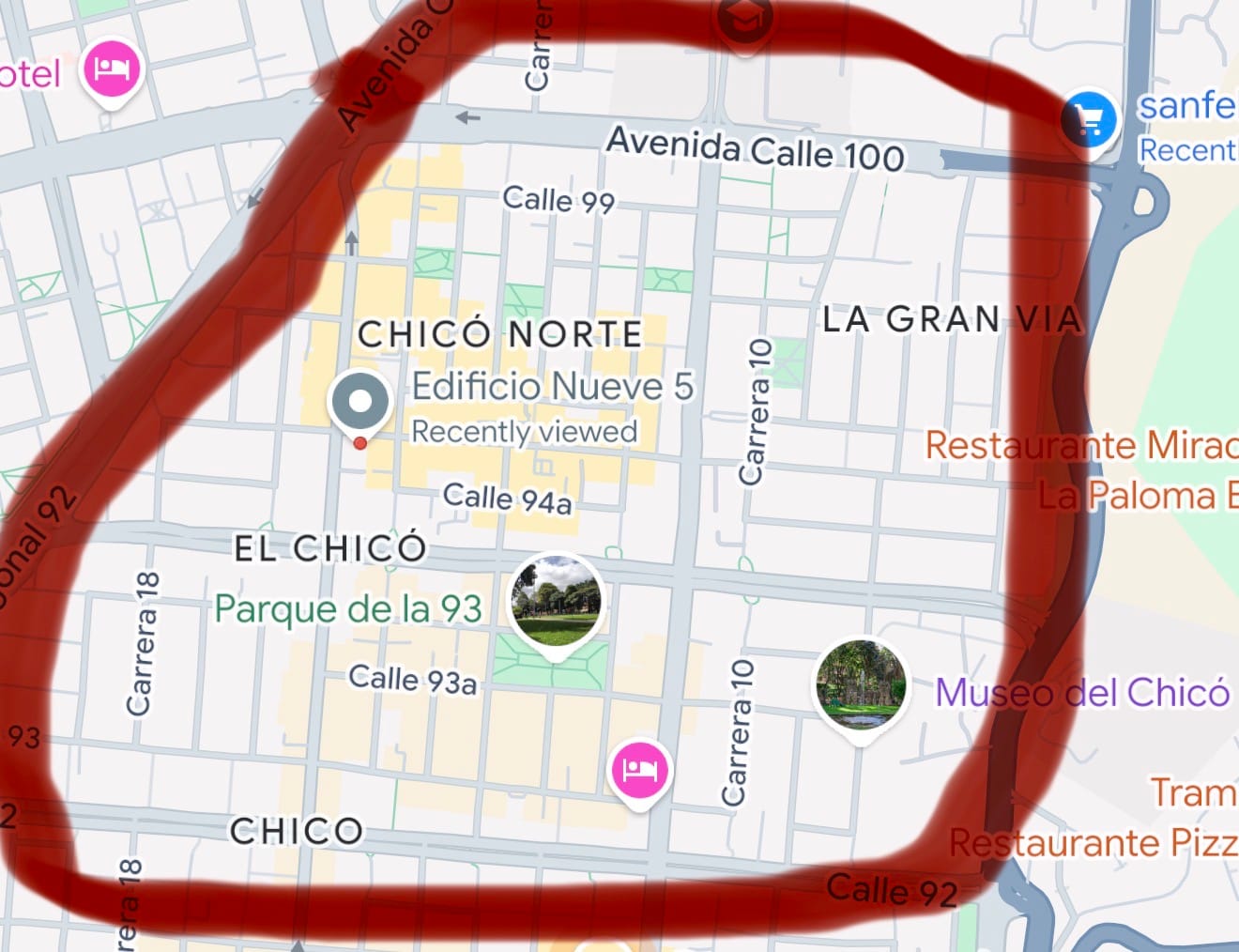
The corporate core. Multinationals, embassies, and the priciest dirt in the city around La Cabrera and El Nogal, where new builds now ask COP 12 to 16 million per m², Miami-adjacent numbers once you convert.
Used stock in the broader zone runs 9 to 12 million. Tenants are executives, diplomats, and the consultants your Airbnb listing photos are aimed at. It’s also safer and quieter than Zona T, which matters to the guest who’s here to work.
Verdict: the passive buy here is capital preservation with reliable corporate demand. But this is also where operators who run furnished units for the corporate and long-stay market put up the best numbers in the city. My friend runs his portfolio in exactly this zone, and his returns are in the costs section of this guide. The area won’t hand you outperformance; the operating model earns it.
#5. Usaquén/Unicentro
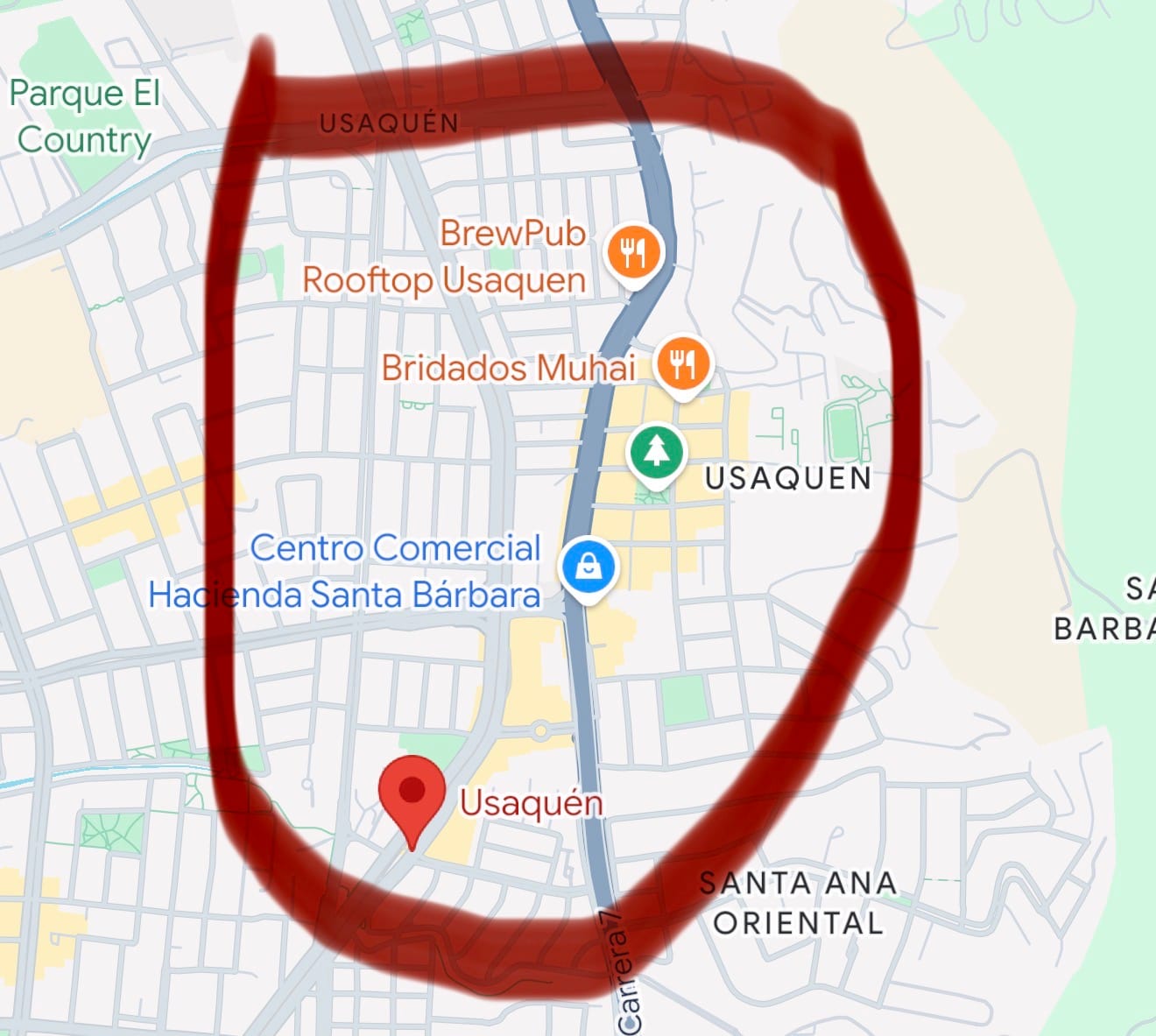
Important: I believe the Unicentro area here is preferable to Usaquén in general.
This area is kind of like a colonial village the city swallowed, with the Sunday market, cobblestones, and a restaurant scene that keeps growing north.
Draws families, older long-stay visitors, and locals who want village feel with city access. Roughly COP 6 to 10 million per m².
Verdict: solid long-stay rentals and the most livable feel on the list, at prices that no longer surprise anyone.
Bogotá vs. Medellín | Best City for Foreign Investors?
Most foreigners considering Colombia default to Medellín, and I get it. The weather is perfect, the marketing machine is world-class, and the yields have been real for those who got in early.
This isn’t a takedown. Far from it. Medellín is Medellín for a damn good reason.
Bogotá is a different trade, and you need to understand it before putting capital here.
Let’s look at a quick breakdown…
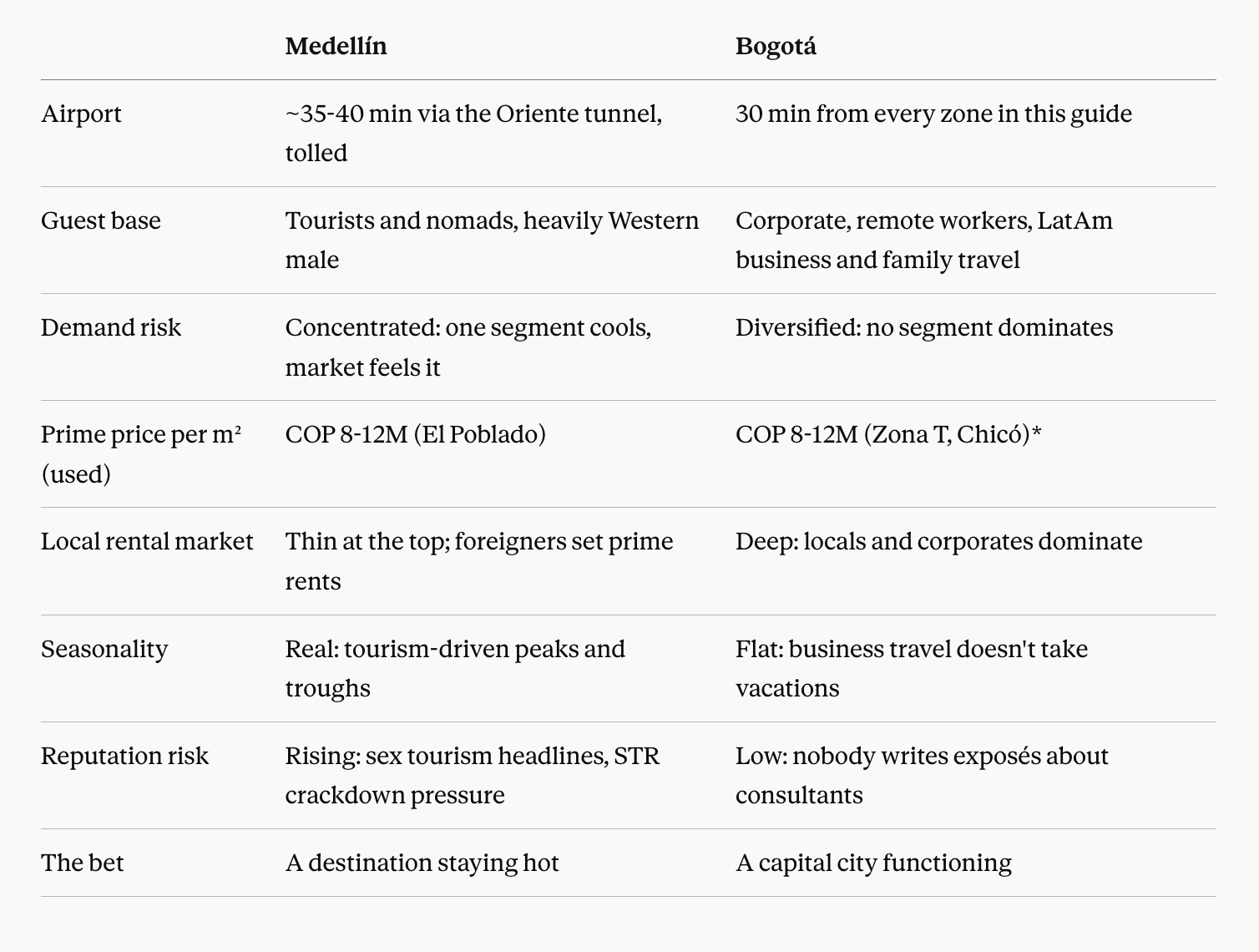
*New construction in Chicó’s top blocks (La Cabrera, El Nogal) runs above this band, COP 13-16M per m² — a premium tier Medellín doesn’t see as often.
The rows that matter most are the last three. Medellín’s prime rental market is priced and sustained by foreign demand, which means your income depends on Medellín staying fashionable and the city government staying friendly to short-term rentals.
Neither is guaranteed, and El Poblado has already seen both wobble. Bogotá’s market is priced by Colombians and sustained by Colombia’s own economy. Your foreign guests add a profitable layer on top of demand that would exist without them.
Prices in the prime zones now sit in the same band, and the history matters here:
Poblado cost a dollar buyer around $1,400 per meter in 2023, and the same meter runs $2,500 to $3,000 today. Medellín already had the repricing Bogotá might be starting to see.
Bogotá costs you the postcard, the weather, the views, the eternal-spring premium your listing photos can’t capture. In exchange, the calendar fills itself twelve months a year with guests who expense the stay.
If you’re buying one property in Colombia and it doubles as your part-time home, Medellín is a fine answer. If you’re buying a rental focused on yield, Bogotá might be the more stable play.
What It Costs and What It Returns
Start with the sticker prices. You’ve seen the per-meter bands; here’s what they actually buy right now:
- COP 450 million, about $140,000: a 60 m² one-bedroom in Chapinero Alto, older brick building, balcony facing the cerros, five minutes on foot from the Zona G restaurants.
- COP 850 million, about $260,000: an 90 m² two-bedroom in a newer tower off Parque El Virrey, the park at your front door.
- COP 980 million, about $305,000: a 110 m² corporate-grade unit in Chicó with a doorman, on the blocks where the embassies live
Those are illustrative, built from current asking bands, and the spread inside every zone is wide. A dated building and a recent one two blocks apart can differ by half, which is exactly why I gave you bands instead of averages.
Read that first line again, though. $140,000 buys a real apartment in a walkable district of a ten-million-person capital. In Miami, that’s the down payment.
Getting in is cheap by regional standards too: call it about 3% all-in for notary, registration, and money-transfer costs, with the full mechanics in the taxes section below.
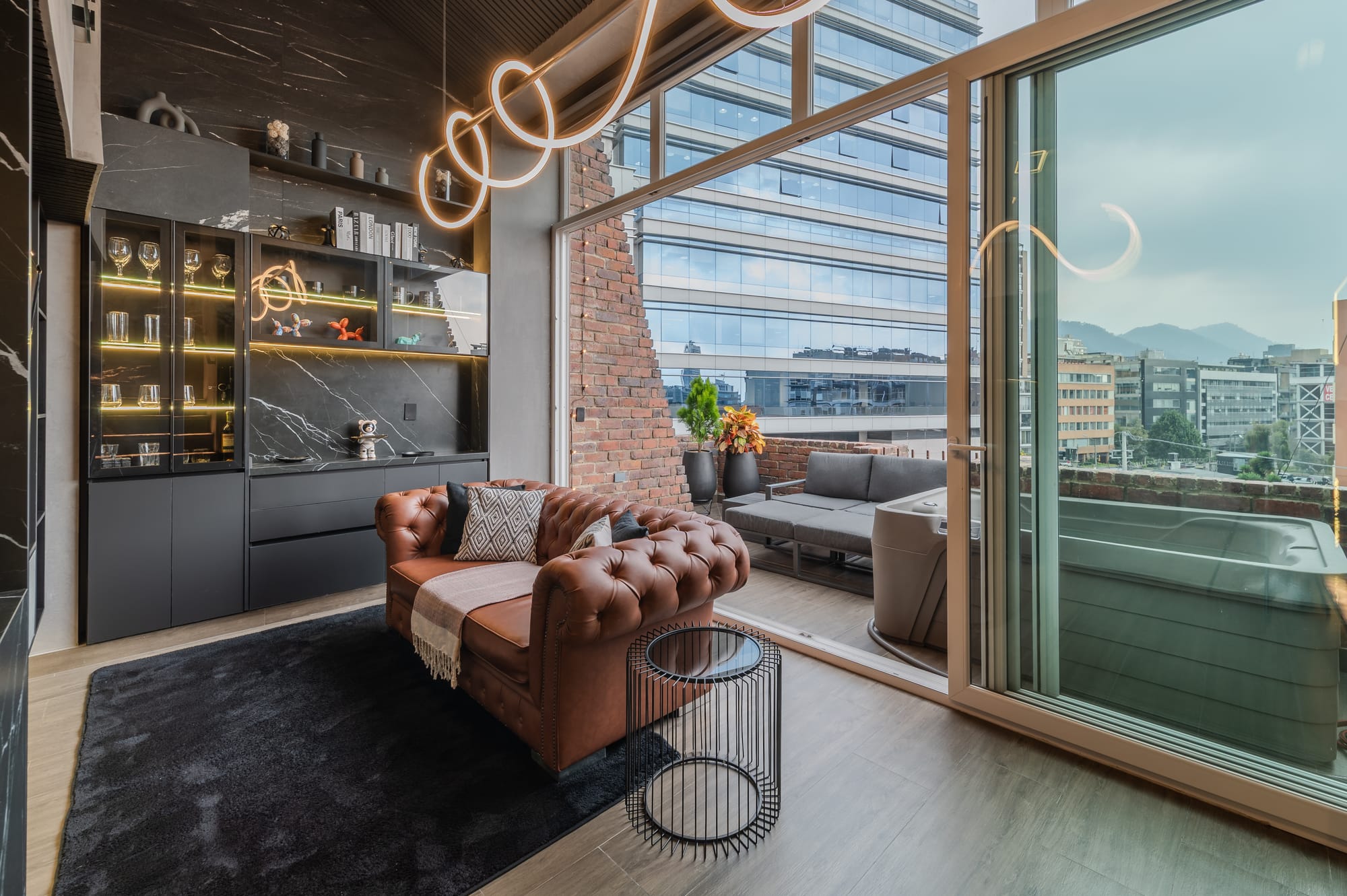
So much for asking prices and projections. Numbers from a real portfolio beat both, and my friend runs fourteen furnished units in the Chicó and Parque 93 zone: listed on Airbnb, but rented mostly in blocks of weeks and months to remote workers, consultants, and Latin American business travelers. We walked through his operation on camera, and here’s one representative unit from it:
And here’s the hard numbers from that video in USD:
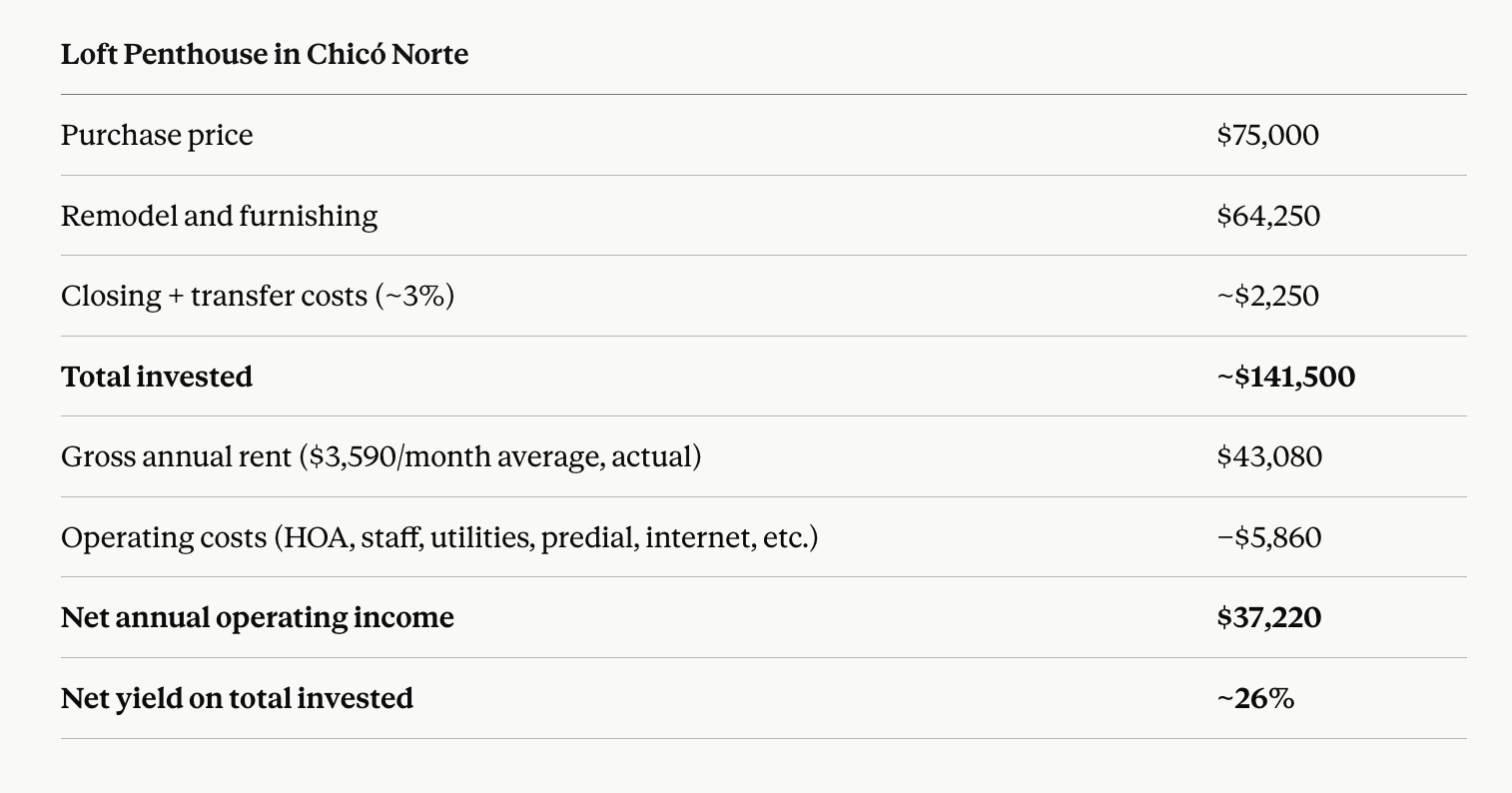
Every figure in that table comes from a unit running on Airbnb right now, and the second line is the one to study before you anchor on the 26%…
The remodel and furnishing cost nearly as much as the apartment.
My friend bought a rough loft penthouse for $75,000, then spent almost as much again turning it into the product, and that $64,250 is why it collects $3,590 a month instead of local long-term rents. Buy one of the finished apartments from the examples above, furnish it well, and run the same guest model, and you’re looking at a strong result – potentially in the low double digits. The 26% is what buying the ugly one and doing the work pays.
One piece of context makes any of these yields possible: Colombia’s central bank rate sits at 9.25%, so mortgages are brutally expensive and most local buyers sit in cash. You’re not bidding against cheap leverage, which keeps entry prices reasonable against rents. If rates fall under the new government, financed demand comes back, a tailwind for whatever you already own.
The Honest Risks
Every market pitch skips this part, so here’s mine in full:
Politics and the peso, still
The election broke the right way for investors, but a sub-one-point margin is not stability, and half the country voted against the program your thesis rides on. If the new government stumbles, the peso gives back part of its 24% run, your dollar value marks down with it, and the repricing this guide anticipates gets delayed. The FX is half the trade in both directions. Size your position like the currency can move 15% against you, because it has before.
Safety, addressed straight
Bogotá’s reputation runs worse than the reality on this corridor, and the reality still deserves respect. Street crime is real: phone snatching is the city’s signature offense, and robberies concentrate on public transit. The risk is heavily geographic, though. Everything in this guide sits in zones where daily life is fine, and I’ve spent over a year here without incident by following the local rules: phone out of sight, Ubers at night. For your investment, the math is calmer than your gut. Your corporate guest moves between the apartment, the office, and restaurants inside the same three safe neighborhoods, and safety is exactly why demand concentrates on this corridor. The mistake that hurts a rental is buying two blocks past the edge of the good zone to save money, and the neighborhood section exists to prevent it.
Short-term rental regulation
Colombia treats STRs lightly at the national level, but the pressure is municipal, and Medellín has shown the playbook: neighbor complaints, building bans, permit talk. Bogotá has been quieter because the guest mix causes fewer problems, but the mechanism exists here too. Buy in buildings whose HOA explicitly allows short stays, and own a unit that works as a furnished mid-term rental if rules tighten. A consultant on a two-month contract isn’t what any regulation targets.
Construction quality
Builders here range from excellent to cosmetic, and a shiny lobby proves nothing. Pay for a real inspection, ask about the building’s reserve fund, and treat a suspiciously cheap administración fee as deferred maintenance you’ll fund later.
Exit liquidity
Prime Bogotá resells into a deep local market. The catch is speed: local buyers negotiate slowly and financing is scarce at 9.25% rates, so sales take months. This is a five-year asset, not a flip.
You…
The 26% yield came with a renovation, staff, and a guest pipeline. The most common failure here is an absentee owner trying to run a hands-on model from another country. Commit to the operation or hire the person who runs it. Otherwise take the passive number, without embarrassment.
Taxes, Ownership, and the Visa
The mechanics of buying are simple. Foreigners purchase in their own name with no restrictions and no residency requirement.
Closing runs about 1.5 to 2% in notary and registration fees, typically split with the seller, and moving the money in adds the 0.4% financial transactions tax plus your exchange spread — the roughly 3% all-in from the costs section.
The step that matters most is the boring one: your lawyer registers the inflow with the central bank as foreign investment. That form is what lets you convert pesos back to dollars and take profits out cleanly when you sell. Skip it and your money enters Colombia easily and leaves it painfully.
Estratos hit your operating costs directly: estrato 5 and 6 buildings pay surcharged utility rates that subsidize the lower strata, which is why the electricity line in the table above looks high for one apartment. Price it in.
On rental income tax, I’ll be honest: ask three Colombian accountants and you’ll get three confident, contradictory answers, ranging from declaring at full rates on net income to a withholding regime on payments abroad. In practice, hire an accountant whose method you understand, and have your accountant at home check how the double taxation treaty situation applies to you. The predial you saw in the table is the easy part; the income side is where you need a professional.
The visa deserves its own warning label in 2026. Buying property worth 350 minimum salaries qualifies you for a migrant visa, and that threshold just moved: the government raised the minimum wage 23% this year, so the bar jumped from roughly $125,000 to about $190,000 at today’s exchange rate, a court fight over the decree notwithstanding. The strong peso and the wage hike stacked. If the visa is part of your motivation, note that my friend’s $75,000 penthouse wouldn’t qualify on its own, but the Virrey and Chicó examples from the costs section would.
The Bottom Line in Bogota 🇨🇴
Bogotá is the cheapest capital of Latin America’s big six, sitting on ten kilometers of walkable, connected, corporate-fed real estate, and the two forces that kept it cheap are reversing at the same time.
But the easy discount is gone.
The repricing has started, albeit just barely. If you want rental income backed by a functioning capital rather than a fashionable one, and you’re willing to operate or hire someone who will, this might be the most interesting entry window Bogotá has offered in years.
Although, there’s an argument waiting for the peso to weaken is the better play.