
The Dual-Base Strategy™
Because the “forever nomad” lifestyle sounds sexy until you’re around 35+ with no roots anywhere...

Author
Jake Nomada
Published
Jul 17, 2026
Read time
6 min read
Every long-term digital nomad, remote worker, expat, immigrant — whatever you want to call em’ — they all come to the same conclusion eventually:
One city isn’t going to cut it long-term.
There’s a number of reasons for this: weather windows, visa math, cost creep, lifestyle gaps, healthcare, schools, taxes…the list could go on and on.
But the principal reason? Autism.
Nah, just playing, it’s actually…
Boredom.
Damn near every dude who makes money from their computer and has traveled around for years on end, yet can’t sit still in one city for a whole year = gets bored easily.
There’s this restless energy we can’t fully let go of. Cowboy energy.
Probably the reason we hopped on a plane to a far off land in the first place. We wanted the excitement, the adventure, that extra energy you get from being in a new place.
We needed the endorphins.
On the flip-side…
The “forever nomad” lifestyle sounds sexy until you’re around 35+ with no roots anywhere.
But here’s what nobody tells you:
- You’ll eventually crave community over constant novelty
- Your social circle becomes shallow when you move every 2-3 months
- Building anything meaningful (business, relationships, wealth) often requires stability
- Healthcare emergencies abroad will test every decision you’ve made
- Kids change EVERYTHING about the equation
Yes, traveling around to a new city every month for years on end eventually wears on you too.
So what’s the solution?
One-city all year isn’t going to cut it, but perpetually living out of a new Airbnb apartment each month won’t work either.
Luckily, there’s a sweet spot most people miss…
Introducing: The Dual-Base Strategy™
The Dual-Base Strategy™ is simple enough. Nothing too complex here.
The gist of it is:
Picking 2-3 cities/towns and rotating between them seasonally throughout the year.
Then you go back to the same 2-3 places the following year, continually building community and digging deeper into each city.
You can use this strategy to organize the year in a number of ways, all depending on how you want to set things up.
Examples:
- Base #1: 6 months // Base #2: 6 months
- Base #1: 9 months // Base #2: 3 months
- Base #1: 4 months // Base #2: 4 months // Base #3: 4 months
- Base #1: 6 months // Base #2: 3 months // Base #3: 3 months
No matter how you structure it, the idea is the same…
You get the benefits of location independence without the downsides of being permanently rootless.
Example “Dual-Base” Ideas for the Single Broski
You don’t have kids. You don’t have a school calendar anchoring you. That’s your superpower.
You can chase weather windows, stack visa runs, and optimize purely around cost, lifestyle, and vibes. Or around beaches, nightlife, and otra cosas…
Here’s some ideas:
Lima 🇵🇪 (Dec-May) → Rio de Janeiro 🇧🇷 (Jun-Nov)
Lima’s summer is warm and dry, offering up rare sunshine for a city that’s gray most of the year. You get the absolute best of the city from December through May.
Then bounce to Rio for their mild winter. Rio from June–November dodges the summer heat, Carnival chaos, and peak prices — while still giving you beautiful beaches with weather in the mid-70s to low-80s.
Both coastal mega-cities, but totally different energy.
Mexico City 🇲🇽 (Jun-Jan) → Mazatlan 🇲🇽 (Feb-May)
CDMX rainy season sounds bad but it’s mostly afternoon showers — mornings are clear and temps stay perfect in the 70s. You ride out summer and fall in the city, enjoy the holidays.
Then dip to Mazatlán right as it enters peak dry season. February through May on the Sinaloa coast is sunny, uncrowded, and cheap. Nightlife is good and seafood is world-class.
Guadalajara 🇲🇽 (Jun-Jan) → Puerto Vallarta 🇲🇽 (Feb-May)
Same logic as the CDMX combo but closer. Guadalajara is three hours from PV by car. You get the big-city infrastructure, food scene, and lower cost of living through the productive months.
Then slide to the coast when the Pacific dries out. February through May in Vallarta is the sweet spot, before the humidity and rain return in June. Great nightlife, tons to do, and a lot of locals from Guadalajara on the weekends.
Asuncion 🇵🇾 (Apr-Nov) → Florianópolis 🇧🇷 (Dec-Mar)
Asunción is your low-cost base: easy residency and low-to-no tax burden. April through November catches the mild Paraguayan winter and avoids the brutal January heat.
Then you reward yourself with a Brazilian summer in Floripa, arguably the best beaches in southern Brazil. December through March is peak season but the island justifies the prices during this time of year.
Buenos Aires 🇦🇷 (Sep-Dec) → Punta del Este 🇺🇾 (Jan-Apr) → Asunción 🇵🇾 (May-Aug)
A Southern Cone triangle…
BA in spring is the city at its best. You’ve got jacarandas blooming, outdoor dining, perfect weather, and so much more.
In January, you cross the river to Uruguay and head to Punta del Este for peak beach season.
Then Asunción for winter = mild temps, rock-bottom costs, and Paraguay’s territorial tax system while you reset for the next loop.
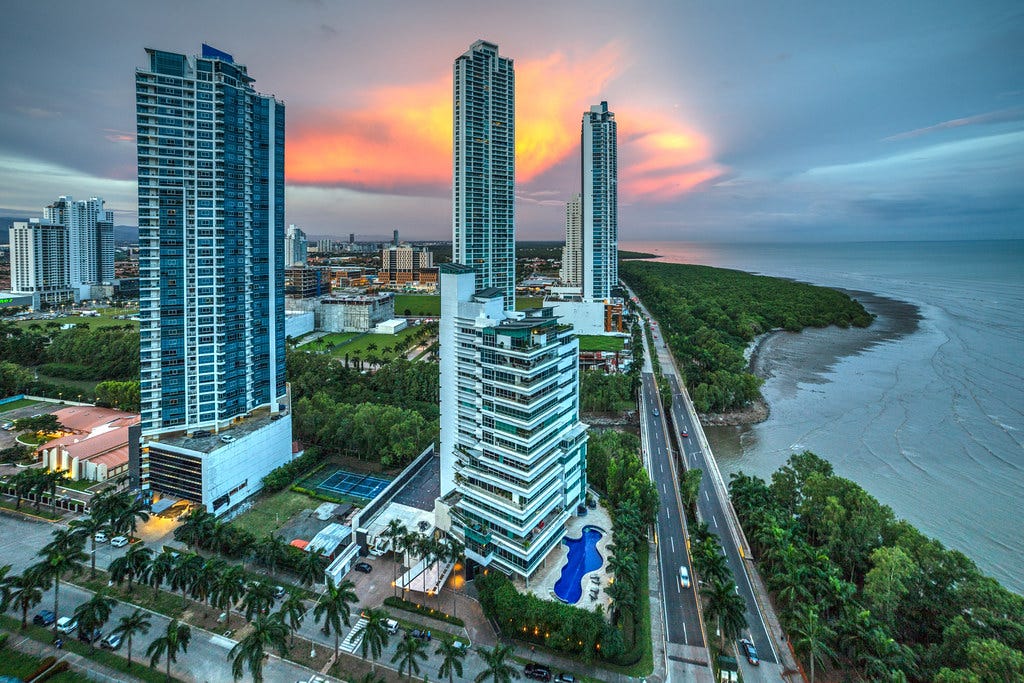
Panama City 🇵🇦 (Nov-Apr) → Cali 🇨🇴 (May-Jul) → Pereira 🇨🇴 (Aug-Oct)
Panama dry season is November through April, which is by far the best time to be in PTY. The country also works well as a tax base for many.
When it gets rainy, you then hop to Cali for the mid-year veranillo window when rain eases up and the temperatures are mild.
Finish in Pereira, part of the Colombian “Coffee Axis” — with altitude that keeps temps spring-like. It’s a cheaper, quieter base to close out the year before Panama again.
Example “Dual-Base” Ideas for Families
Everything above assumes you’re flying solo. Once kids enter the picture, the motivation shifts. You’re not running from boredom anymore. Well, maybe you still are, but it’s not the entirety of the equation.
You’re optimizing around school calendars, healthcare, safety, and giving your kids a childhood you couldn’t have bought back home.
The strategy is the same. The reasons behind it are completely different.
Here’s a few quick ideas for families:
Santiago 🇨🇱 (Mar-Nov) → Punta del Este 🇺🇾 (Dec-Feb)
Santiago gives you top-tier schools, infrastructure, and a real city for the majority of your year.
Once summer break for the kids is in session, you cross to Punta del Este, “the Hamptons of South America” — with beaches, restaurants, and an Argentine-Uruguayan crowd.
Asunción 🇵🇾 (Mar-Nov) → Punta del Este 🇺🇾 (Dec-Feb)
You already know the Asunción pitch: territorial taxation, cheap rent, easy residency. Your family lives lean (still solid quality of life) for nine months.
Then you splurge hard. Punta del Este for summer is the reward. One of the nicest seaside resort towns on the continent and it feels like it after a year in Paraguay.
Buenos Aires 🇦🇷 (Mar-Nov) → Florianópolis 🇧🇷 (Dec-Feb)
BA gives you culture, food, nightlife, and great international schools at dollar-friendly prices.
December hits and you fly to Floripa. Southern Brazil in summer is hard to beat for families — warm water, laid-back beach towns, and enough Brazilian chaos to keep the kids entertained.
Montevideo 🇺🇾 (Mar-Nov) → Florianópolis 🇧🇷 (Dec-Feb)
Montevideo is stable, safe, walkable. Potentially the most “normal” capital in South America by many metrics. Schools are solid, healthcare is good.
During summer break, you head north to Floripa. Different energy than Montevideo. Louder, warmer, more fun. The kids will notice.
Panama City 🇵🇦 (Sep-May) → Guanacaste 🇨🇷 (Jun-Aug)
Panama is a useful hub — dollar economy, banking, international schools, territorial tax.
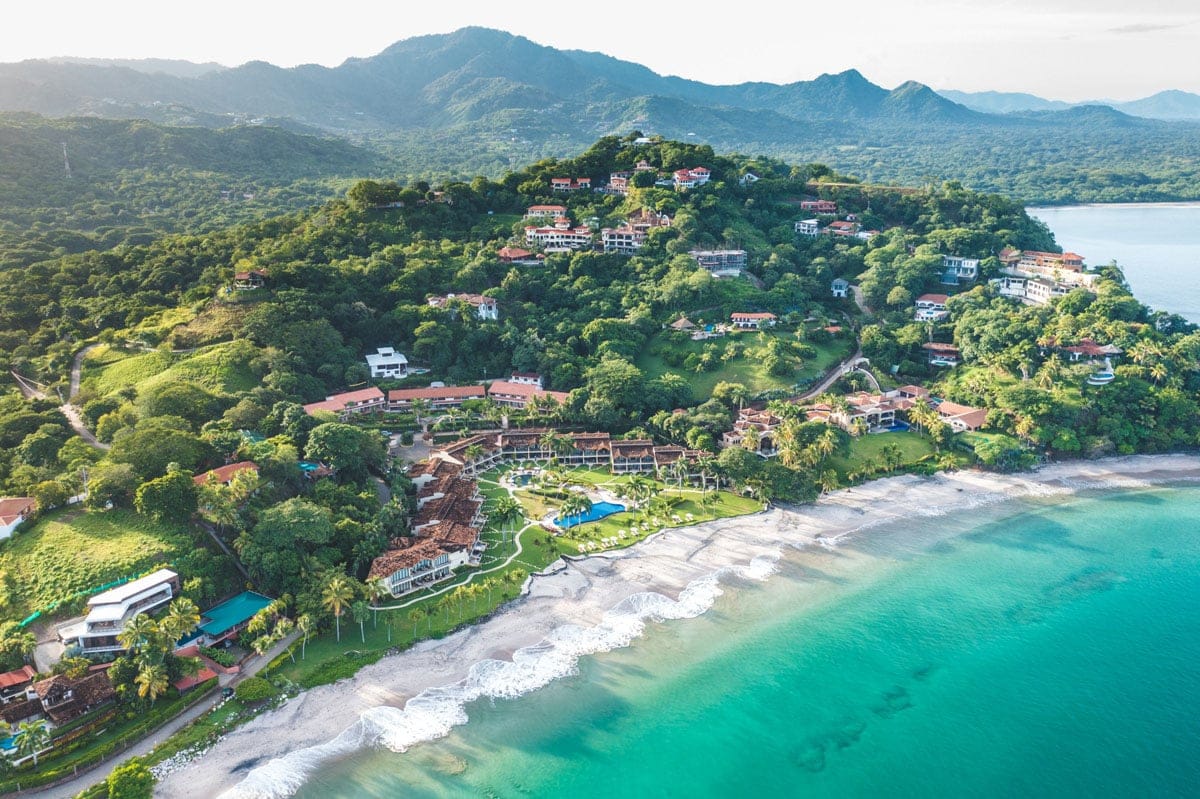
When the kids are out of school, you bounce to Guanacaste’s Pacific coast. Playa Flamingo or Tamarindo or Santa Teresa. Gold-sand beaches, no humidity, and an easy flight.
Monterrey 🇲🇽 (Sep-May) → Los Cabos 🇲🇽 (Jun-Aug)
Monterrey is Mexico’s business capital and offers top private schools, modern infrastructure, and more. Summers are scorching though.
Escape to Cabo where desert climate keeps it hot but manageable. The beaches are perfect during the Baja summer.
Mexico City 🇲🇽 (Sep-May) → Cap Cana 🇩🇴 (Jun-Aug)
CDMX is the ultimate mega-city base with great schools, culture, food, global connectivity, etc.
During summer break, you fly to the Caribbean and Cap Cana. Luxury resort, warm blue waters, and low-season pricing on everything. The kids won’t complain.
Designing Your Personal…Dual-Base Strategy™
The examples above — for the single broski and the families — are starting points. Not prescriptions.
Your priorities aren’t mine. The home base that works for my family might be utter shite for yours. Different tax structures, different budgets, different kids, different tolerance for humidity and bureaucracy. The list could go on and on.
But that’s the whole point.
You can pick any two or three cities in Latin America — hell, anywhere in the world for that matter — and build your own rotation. The specific cities are irrelevant to the premise.
What matters is the framework: one base for stability, one or two for the gaps it can’t fill.
Because after 12+ years bouncing around Latin America, I can tell you with certainty:
The goal isn’t to live everywhere. It’s to find your favorite couple places and go deeper. To actually build the life and lifestyle you truly want.
Ya tu sabes,
Jake Nomada