Santa Cruz de la Sierra, Bolivia 🇧🇴 Real Estate Investor’s Guide [2026]
Almost nobody puts Santa Cruz de la Sierra on their shortlist, mostly because almost nobody knows anything about it. You get a discount on the real estate and on the lifestyle, and both exist for the same reason: nobody's looked yet.

Author
Jake Nomada
Published
Jul 20, 2026
Read time
18 min read
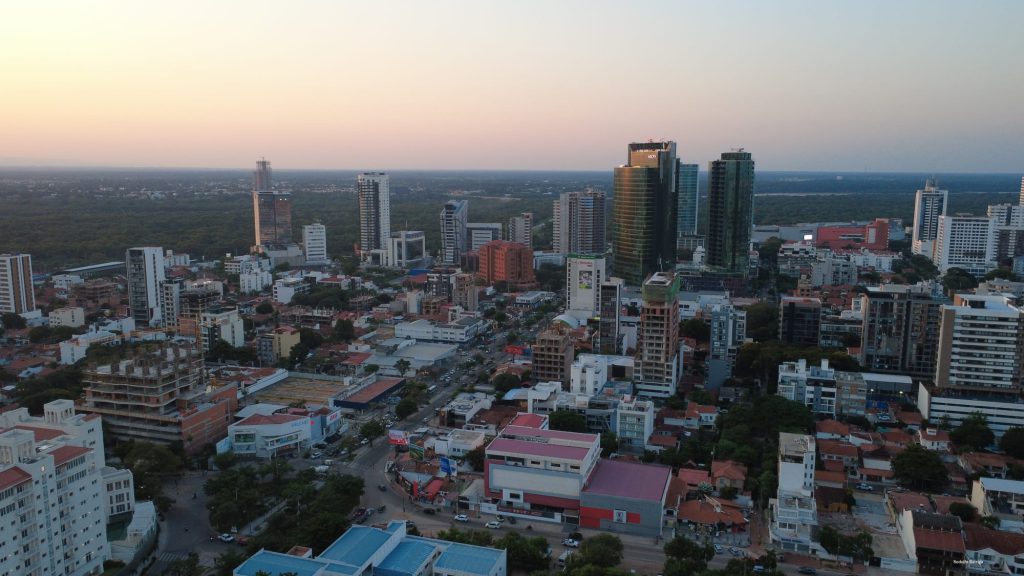
Santa Cruz de la Sierra, Bolivia might be the cheapest big city in Latin America. It might also be the fastest growing in the region.
And against all odds, it’s a city that doesn’t suck to live in.
A month of living well costs less than a weekend in Miami. The city grows the food that feeds Bolivia and anchors a department (state) that generates over a third of the national economy. It expands so fast that NASA tracks it from orbit.
Oh, and new apartments start around $40,000-50,000 USD in Equipetrol.
That’s the best neighborhood in Santa Cruz de la Sierra, and arguably the best in all of Bolivia.
The catch is the country around it.
Bolivia spent twenty years under socialist governments and the last three in the slow-motion currency crisis they left behind.
Then the dominoes fell fast: voters elected their way out in late 2025, and three weeks before I published this, the new government finally killed the currency peg at the center of the crisis.
That single event is why I flew down to Santa Cruz de la Sierra for the first time since 2019 and toured units in person. Currency crises are when patient buyers with dollars get their price, and this one just entered its endgame.
But this is not a market for everyone.
There is no MLS here and no real mortgage market. On top of that, a contract custom called the sobreprecio can quietly hand you someone else’s tax problem.
But if you have cash and the patience for frontier paperwork, Santa Cruz offers something that barely exists anymore: a city of over two million people that’s growing like a weed, at prices the rest of Latin America saw fifteen years ago.
Why Santa Cruz de la Sierra 🇧🇴
Almost nobody puts Santa Cruz de la Sierra on their shortlist, mostly because almost nobody knows anything about it. You get a discount on the real estate and on the lifestyle, and both exist for the same reason: nobody’s looked yet.
Here’s what the city is actually like:
→ It’s not the Bolivia in your head
Bolivia in most minds is the altiplano: La Paz at 12,000 feet, llamas, coca, politics, thin air. Santa Cruz is the opposite. It sits in the tropical lowlands at 1,300 feet, hot and green, closer in feel to interior Brazil than to the Andes.
The local camba culture is commercial and informal, and it wants nothing to do with the political culture of the highlands. This is where Bolivia’s agribusiness money lives, and where the private sector quietly kept building through two decades of socialism in La Paz.
→ It carries the national economy
The department of Santa Cruz generates 34.3% of Bolivia’s GDP, an unprecedented share over the last twenty years per the INE, the national statistics institute. The same bulletin credits the region with 77% of the country’s food production and more than 80% of its agro-exports.
The head of the local chamber of commerce puts the arc simply: in the 1970s, Santa Cruz contributed 12% of national GDP. Today it’s over 30%, and nearly 40% of Bolivia’s private investment sits here.
→ The country-level perks are criminally underrated
Bolivia taxes on a territorial basis, meaning your foreign income sits outside the net entirely. Residency is among the cheapest and fastest in the hemisphere: government fees are dirt cheap and there are no apostilled documents to chase down. Stick around three years and you’re eligible for citizenship.
And out of pure necessity, Bolivia has become one of the most crypto-forward countries in the region, legalizing it in 2024 when the banks ran short of dollars, with the government now building a framework for USDT to circulate as an accepted currency. Some developers in Santa Cruz already quietly take stablecoins for apartments.
→ It might be the fastest growing city in the region
Santa Cruz had around 42,000 residents in 1950. Today the urban area holds roughly two million, and the department’s population is officially 3.1 million per the 2024 census, though the local statistics institute counts over 4 million.
Whichever number you believe, NASA’s Earth Observatory made the city a case study in urban expansion, because you can watch the rings of new development spread in satellite photos decade by decade. For seventy-five years, Bolivians have voted with their feet, and they keep voting for Santa Cruz.
→ It’s safer than the cities everyone actually moves to
The best neighborhoods are walkable at night, and violent crime runs well below the big-name LatAm destinations. Petty theft exists like anywhere in the region, and the usual rules apply after dark outside the nice zones.
But the day-to-day feeling in Equipetrol and the northern zones is relaxed in a way that surprises people arriving from Colombia or Brazil.
→ The locals still like you
Camba culture is warm and laid-back, with a stubborn pride in its own thing. Foreigners are still a novelty here, and being early means people are curious instead of jaded. There’s no gringo fatigue and no tourist pricing reflex. Nobody quietly resents your presence.
Twelve years around Latin America taught me how rare that is, and how fast it disappears once a city gets discovered.
→ It doesn’t suck to live in
Equipetrol and the newer northern zones have rooftop pools, proper gyms, international schools, sushi that holds up, and steakhouses that rival Argentina at a third of the price.
On weekends you have Samaipata and Amboró National Park within a couple hours, plus sand dunes 30 minutes south of town.
The nightlife will surprise you too.
Good vibes aren’t a data point, but they predict which places keep the people who visit. Santa Cruz definitely offers good vibes in 2026.
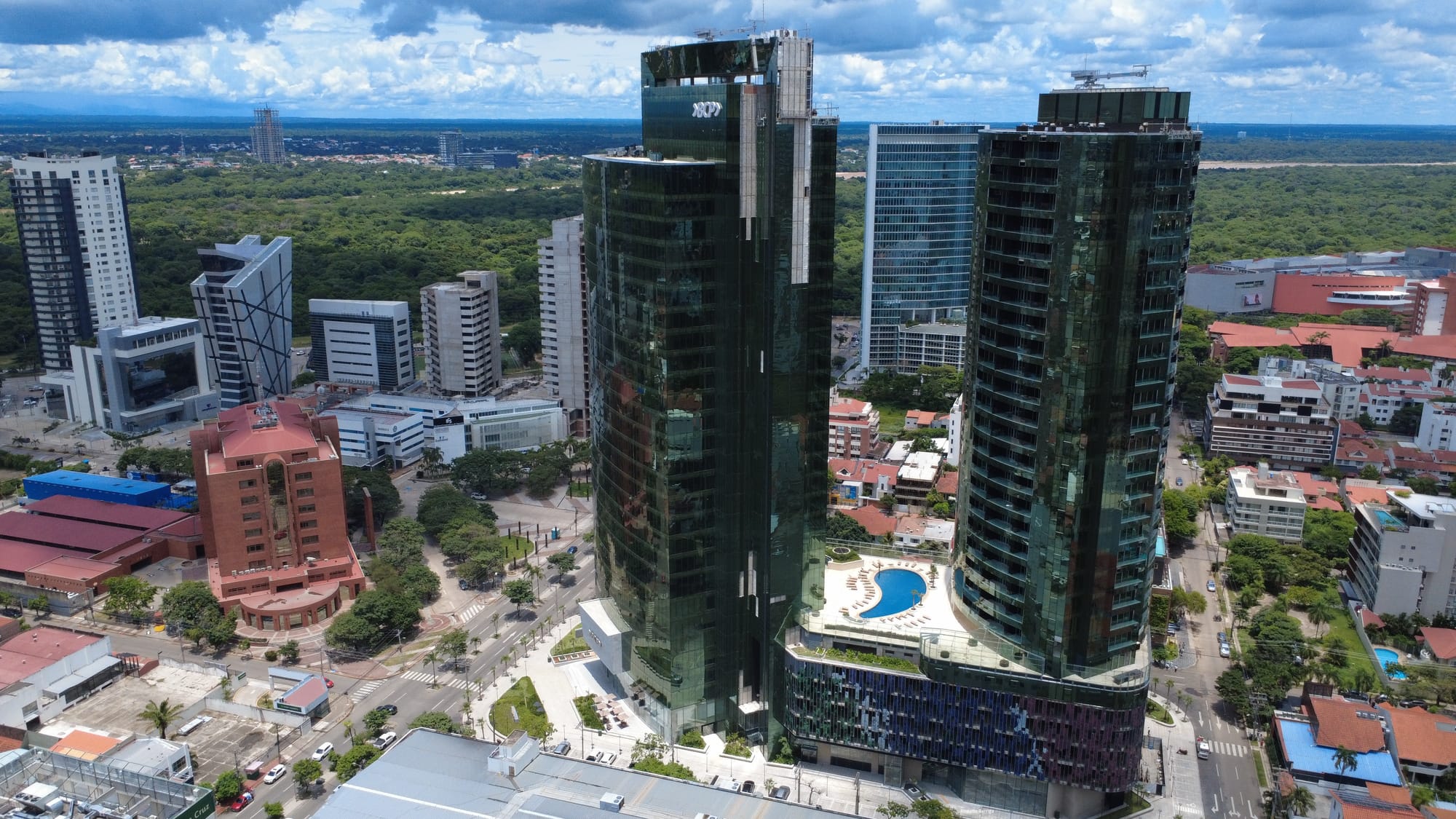
Why Now? | The Macro Moment
For fifteen years, Bolivia pegged the boliviano at 6.96 to the dollar. The peg was affordable while gas exports filled the central bank with reserves. Gas production declined, the reserves drained, and by 2023 the country had entered a full dollar shortage.
Banks rationed withdrawals while importers scrambled for dollars, and inflation climbed from around 2% in 2023 to over 20% by 2025. At its most distorted, the parallel market priced dollars near 20 bolivianos against the official 6.96, a gap that tells you everything about how fictional the peg had become.
The Paz government you met in the intro ended the fiction. On June 26, 2026, the economy ministry formally replaced the peg with a floating rate, and the boliviano opened near 9.73 to the dollar, roughly 40% weaker than the old official rate.
Painful for savers in bolivianos, clarifying for everyone else. The cleanup came in sequence: the central bank began returning roughly $933 million in frozen dollar deposits on July 15, smallest accounts first, and an IMF financing program is in negotiation, with the economy minister floating figures as high as $5 billion.
The stablecoin push you read about earlier fits the same pattern: the state is legalizing what the dollar shortage already forced people to do.
Bolivia in Six Numbers
| 6.96 | the official peg, frozen from 2011 to June 2026 |
| ~20 | where the parallel market priced dollars at its worst |
| 9.73 | where the boliviano opened when it floated |
| 20%+ | inflation at the crisis peak in 2025 |
| $933M | frozen dollar deposits being returned starting July 15 |
| $5B | the IMF package under negotiation |
Now the part that matters for a buyer, including the part most coverage gets wrong.
Property in Santa Cruz was already priced in dollars, so listing prices did not drop 40% when the peg died. And if you were changing money at the street rate before the float, the official 9.73 is actually stronger than the parallel peak, so your on-the-ground costs partially converged rather than collapsed.
What did change: everything priced in bolivianos got dramatically cheaper against your dollars. Construction labor, materials, renovations, property management, your daily life.
On top of that, three years of scarcity taught sellers to respect buyers who can actually deliver dollars. Walk in with verified funds and you hold negotiating leverage that does not exist in Mexico or Colombia.
Currency floats are how these stories start to end. Argentina spent decades defending the indefensible. Bolivia chose the rip-the-bandaid path, with the IMF at the table and deposits unfreezing within weeks. Nobody can promise the cleanup succeeds. But the entry price already reflects the mess, and the repair has visibly begun.
Combine that macro setup with residency being dirt cheap and taxes that never touch your foreign income. Then remember it’s all happening in a city with an authentic vibe the Riviera Maya lost decades ago.
That’s when you start to see the potential.
The Best Neighborhoods in Santa Cruz de la Sierra, Bolivia
Whether you’re flying down to check the city out, planning to base up for a few months, or hunting for a unit to buy, the same five neighborhoods are going to come up.
Here’s how they break down:
Equipetrol
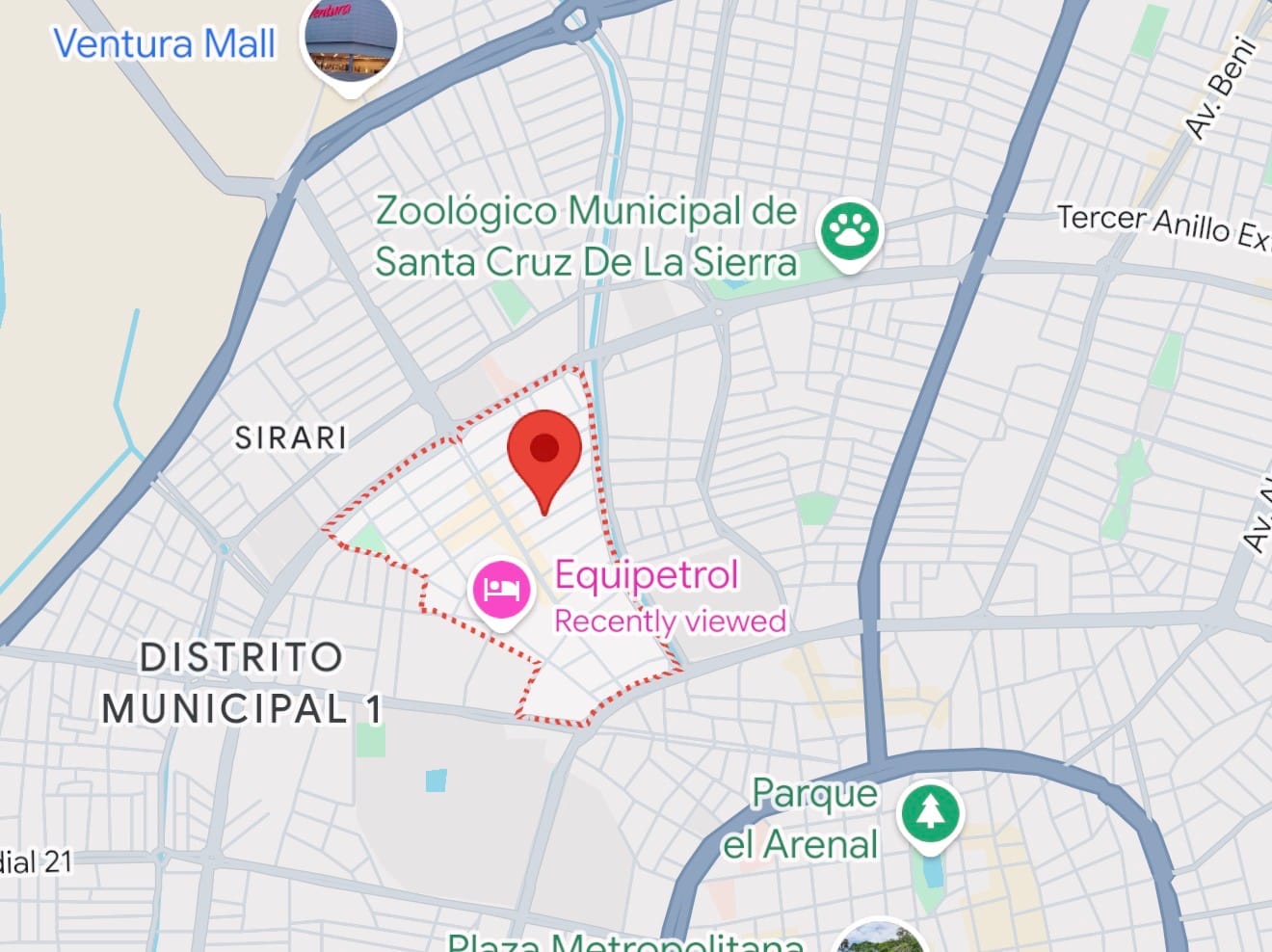
Equipetrol is the answer to most questions about Santa Cruz.
First visit, stay here: the best restaurant strip in the city, walkable at night, and studios on Airbnb run $400 to $800 a month. Good nightlife too.
Basing up, it’s the default for foreigners, with the gyms, cafes, and towers all within a few blocks.
And for buyers, it’s where short-term rental demand concentrates. New one-bedrooms start around $40,000 in the towers I toured, with mid-range stock near $60,000-75,000. Premium units well above that.
Distrito 10
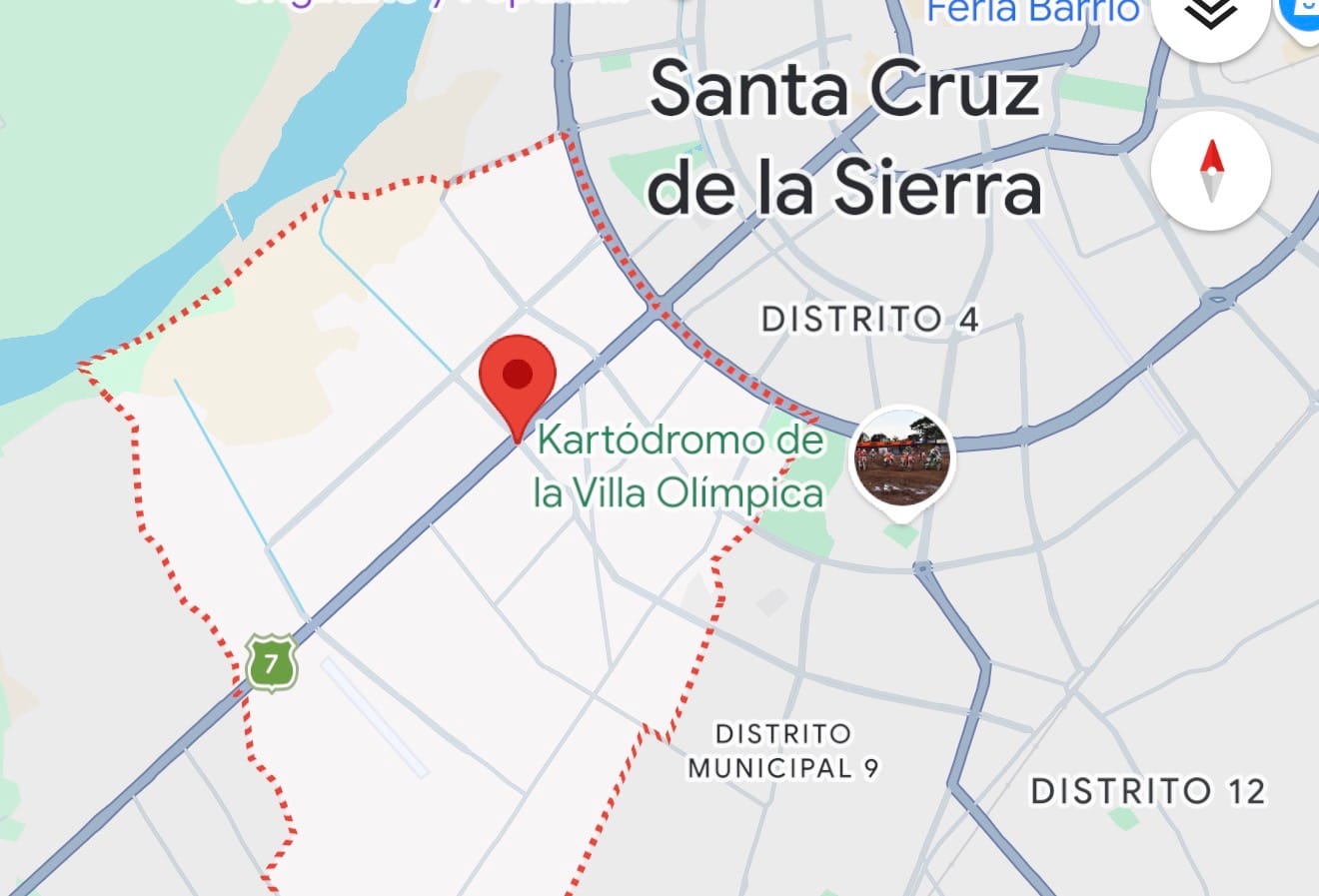
Right next door to Las Palmas, and one of the nicest corners of the city. The anchor here is the new Ventura Sur mall, and for buyers that’s the tell worth reading:
Developers don’t drop a mall of that scale into a district unless the money and the demographics have already arrived.
When visiting, it pairs with Las Palmas as the calm side of town. As a base, you get quiet residential streets with modern retail minutes away.
For buyers, this is the bet on where upscale Santa Cruz is expanding, at an entry point below the established districts. Only time will tell how it plays out, but that new mall is the biggest catalyst for this area.
Distrito 10 is a thesis, it’s got but the potential, but only time will tell.
[INSERT YOUTUBE VIDEO]
Urubó
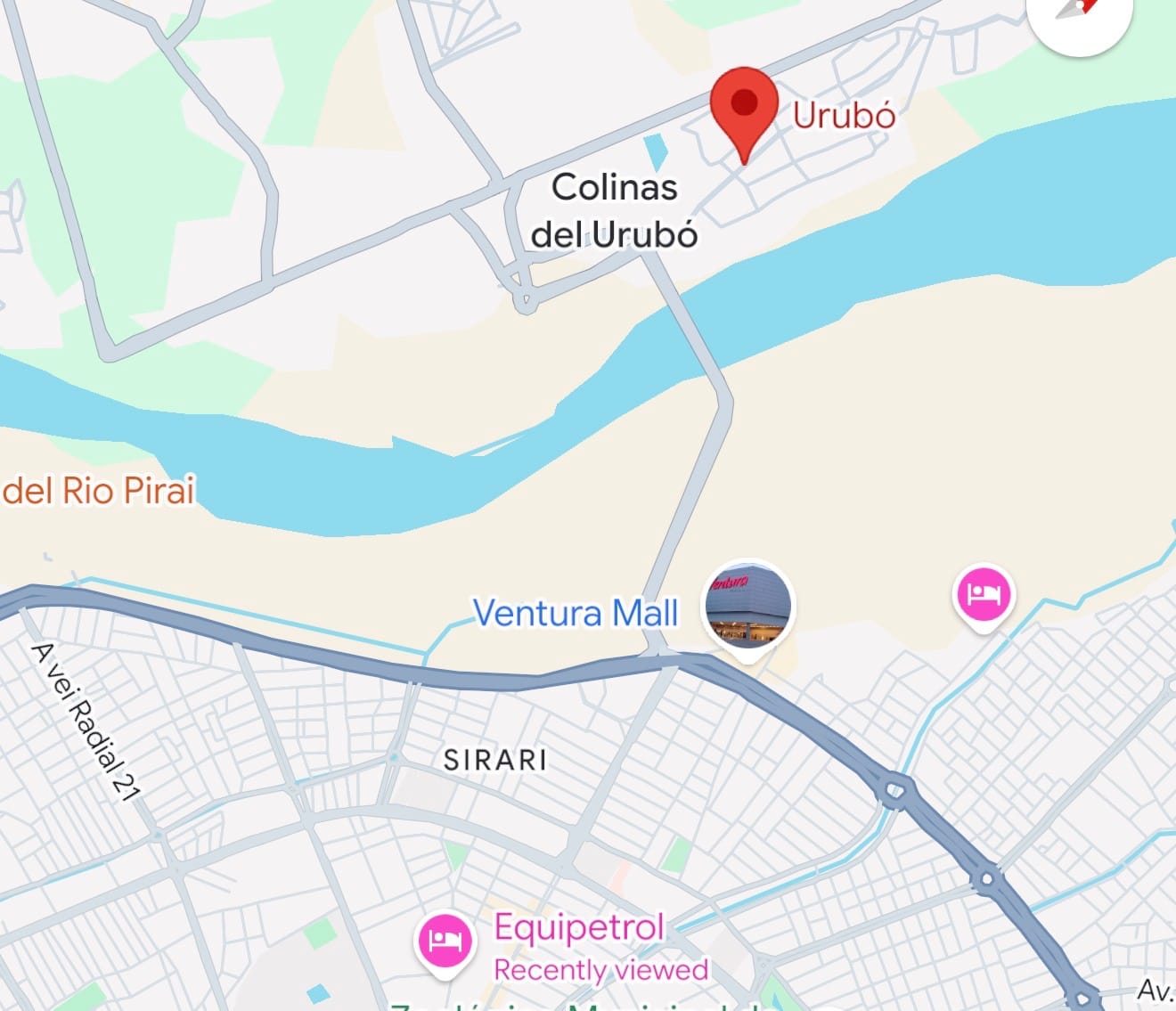
Across the river, the gated-community and villa zone where wealthy cruceños build. Visiting, it’s a look at how the local wealth lives rather than the place to stay.
As a base it suits families who want a compound and a yard, not walkability. For buyers, think suburban land plays and villas rather than rental apartments. Access depends on a limited number of river crossings, which is both the discount and the risk.
Las Palmas
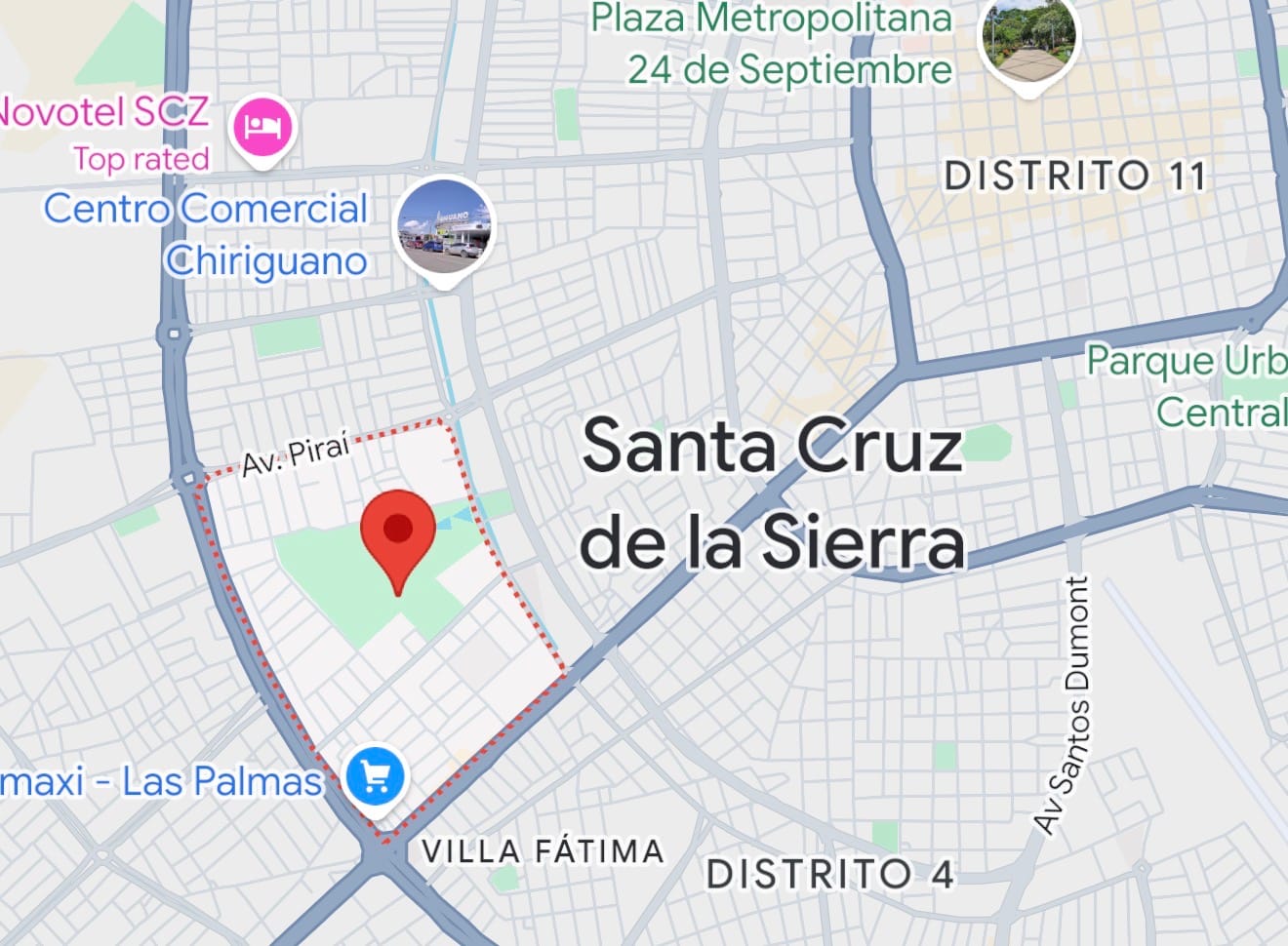
Established upscale residential west of Equipetrol. Quieter and leafier, and as a base it’s the family answer: international schools nearby, calm streets, none of the strip energy.
Less rental liquidity for investors, but solid hold-forever blocks if you’re buying a home rather than a yield. Maybe ideal for families, but probably a skip for most reading this.
Centro
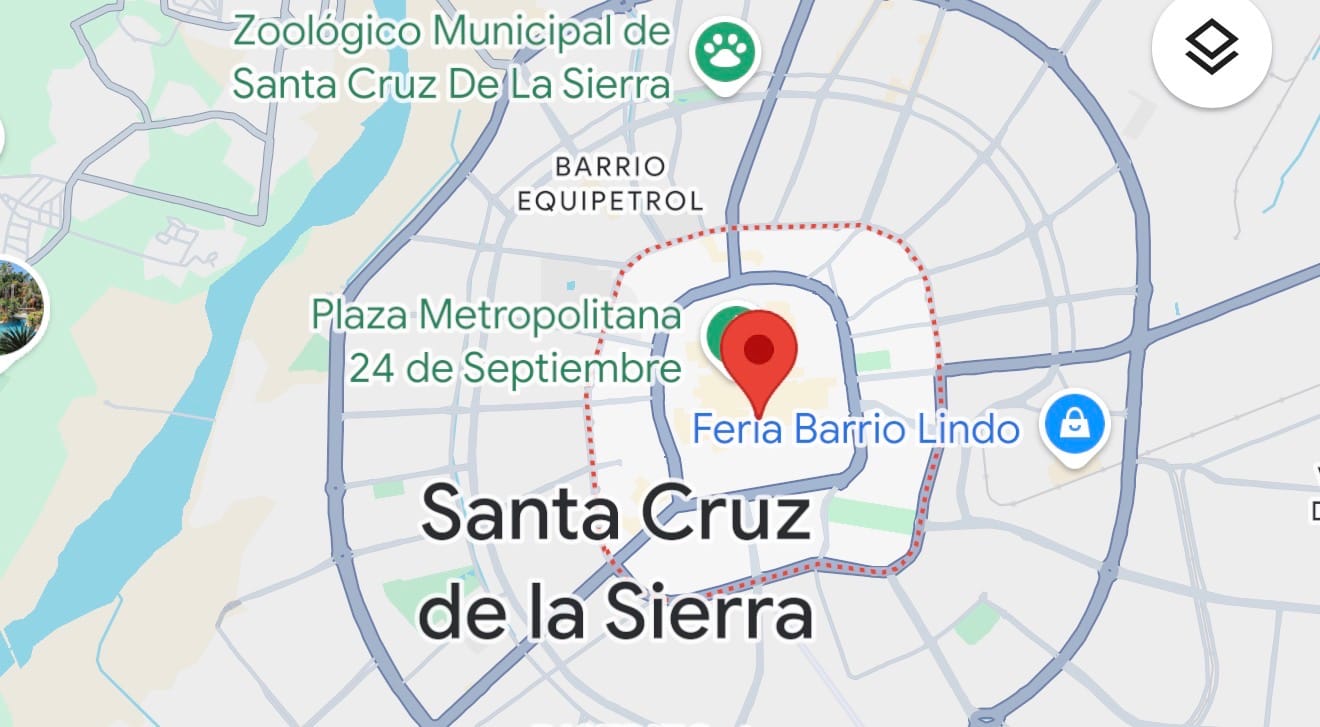
The historic core around Plaza 24 de Septiembre. Spend an afternoon here when you visit, because it’s the only part of the city with real age to it.
As a base, most foreigners last a week before migrating north. For buyers it holds the cheapest entries in the city, in character buildings with the weakest tenant profile. Interesting for contrarians, not for first purchases.
However, nightlife in centro can be pretty fun and you’ll probably end up here at some point if you’re partying in Santa Cruz de la Sierra.
Santa Cruz de la Sierra 🇧🇴 vs Asunción 🇵🇾
Regular readers know I’m bullish on Paraguay, so this comparison is a compliment in both directions.
The two cities share DNA: lowland, hot, agro money, business towns in countries the investment world writes off.
And the cleanest way to understand Santa Cruz today is that it’s Asunción about five years ago, before everybody and their mother discovered it.
See what had happened was…
Asunción got “found” during Covid, maybe around 2021-22, quietly, by the flag theory crowd, those looking to escape taxes, and a few investors willing to look past the “why on earth would you buy in Paraguay?” jokes.
Business-class projects in the good districts now run $1,600 to $2,400 per m², while luxury stock in Villa Morra and Recoleta can reach $2,500 to $3,500. Unheard of just a few years back. The people who bought early look like geniuses for doing something that felt uncomfortable at the time.
Now run that price growth backwards…
Three to five years ago, Asunción’s good districts traded right around where Santa Cruz trades today: near $1,100 per m² for brand-new construction in the center, one-bedrooms from $40,000.
Put differently: $1,100 in Asunción today buys an economy unit in an older building. In Santa Cruz it buys new construction in the best district. Same cheap entry, same agro economy underneath.
Even the foreigner situation matches, a small early trickle the locals still find charming. If anything, Santa Cruz brings a rawer growth engine, because Asunción’s core population is roughly flat with its expansion pushed to the suburbs, while Santa Cruz proper keeps absorbing migration at scale, decade after decade.
The honest caveat, and it’s the one that matters:
Paraguay earned its premium with boring macro stability, which Bolivia can’t yet offer. That gap is exactly what you’re not paying for. You’re buying a ticket to the same movie, twenty minutes in, at a fraction of the price. Nobody can guarantee the ending.
Cost of Living, Investment Analysis, and Potential ROI
Daily costs first, because this is the widest gap between perception and reality I’ve found anywhere in the region.
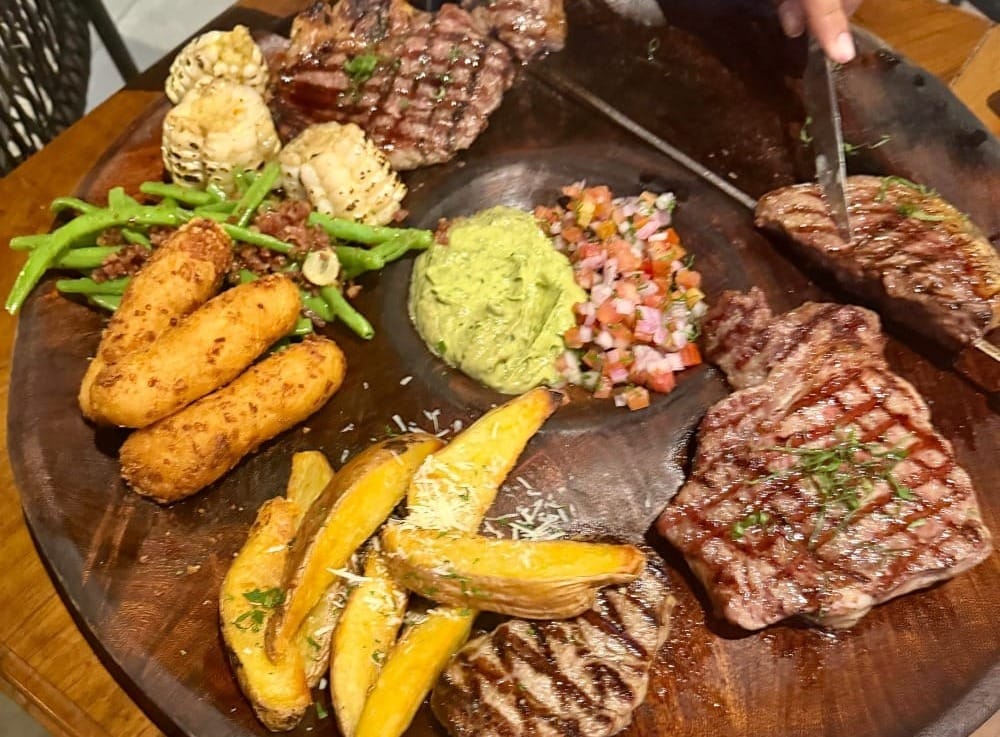
Lunch at a proper local spot runs $3. Dinner for two at a top steakhouse lands around $30 to $40 with wine.
This was $42 total at nice spot in Equipetrol, summer 2026:
A one-bedroom rental in a good zone goes for under $500 a month long-term. The cost-of-living databases put a single person’s budget in the $700 to $850 a month range, and that’s living like a local.
Live like a foreigner who says yes to everything and you’ll still struggle to burn $1,500. A luxury apartment rental on a long-term lease is going to run you $700 a month, give or take. I’m talking in a building like this.
A family does very well on $2,500. I haven’t found another two-million-person city in the hemisphere where that math works.
Buying Real Estate in Santa Cruz de la Sierra
Don’t take my word for any of this.
Filter InfoCasas to under $60,000 in and around Equipetrol and you get 140 results as of this writing, including turnkey units with tenants already in place paying monthly rent.
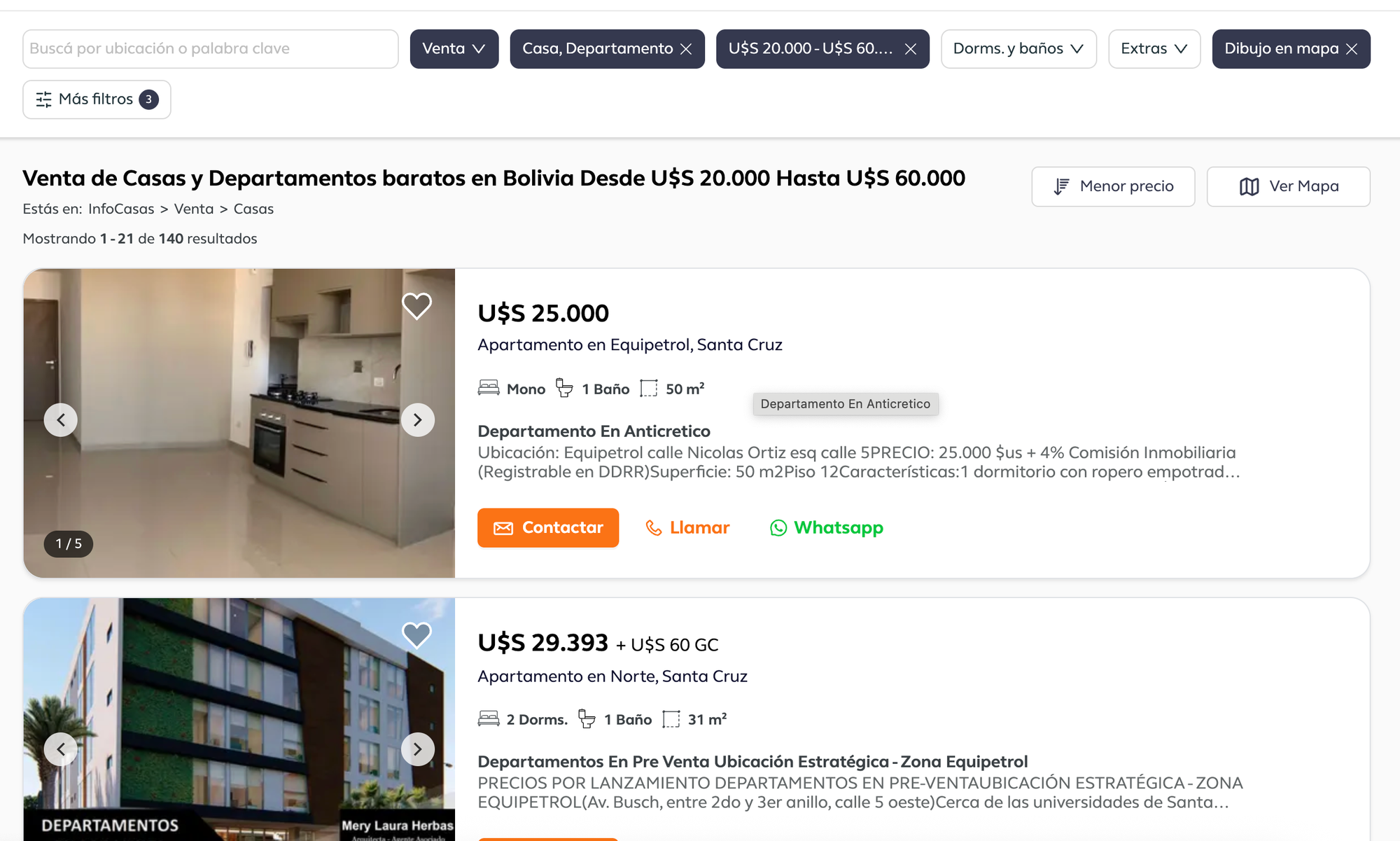
Here’s a sample of what’s listed right now (July 2026) there, the portal locals actually use:
| Building | Unit | Asking |
|---|---|---|
| Sky Equinox (pre-sale, Equipetrol 4th anillo) | 35m² studio, new, cash only | $46,000 |
| Sky Level (pre-sale, Equipetrol, Av. San Martín) | 50m² 1BR, delivery Dec 2026 | $55,000 |
| Spazios Edén (pre-sale, Equipetrol) | 1BR | from $59,450 |
| Sky Elite (Equipetrol) | 36m² furnished studio, “ideal for Airbnb” | $63,000 |
| Sky Tower (pre-sale, Equipetrol) | 38m² studio, 16th floor | $77,500 |
| You Plaza (Equipetrol Norte) | 54m² 1BR, park view | $86,500 |
| Domus Onix (pre-sale, Sirari) | 74.7m² 2BR | from $100,845 |
| Golden Tower (pre-sale, Equipetrol) | 85m² 2BR | from $122,995 |
A few things to know about those numbers….
The cheapest tier is pre-construction:
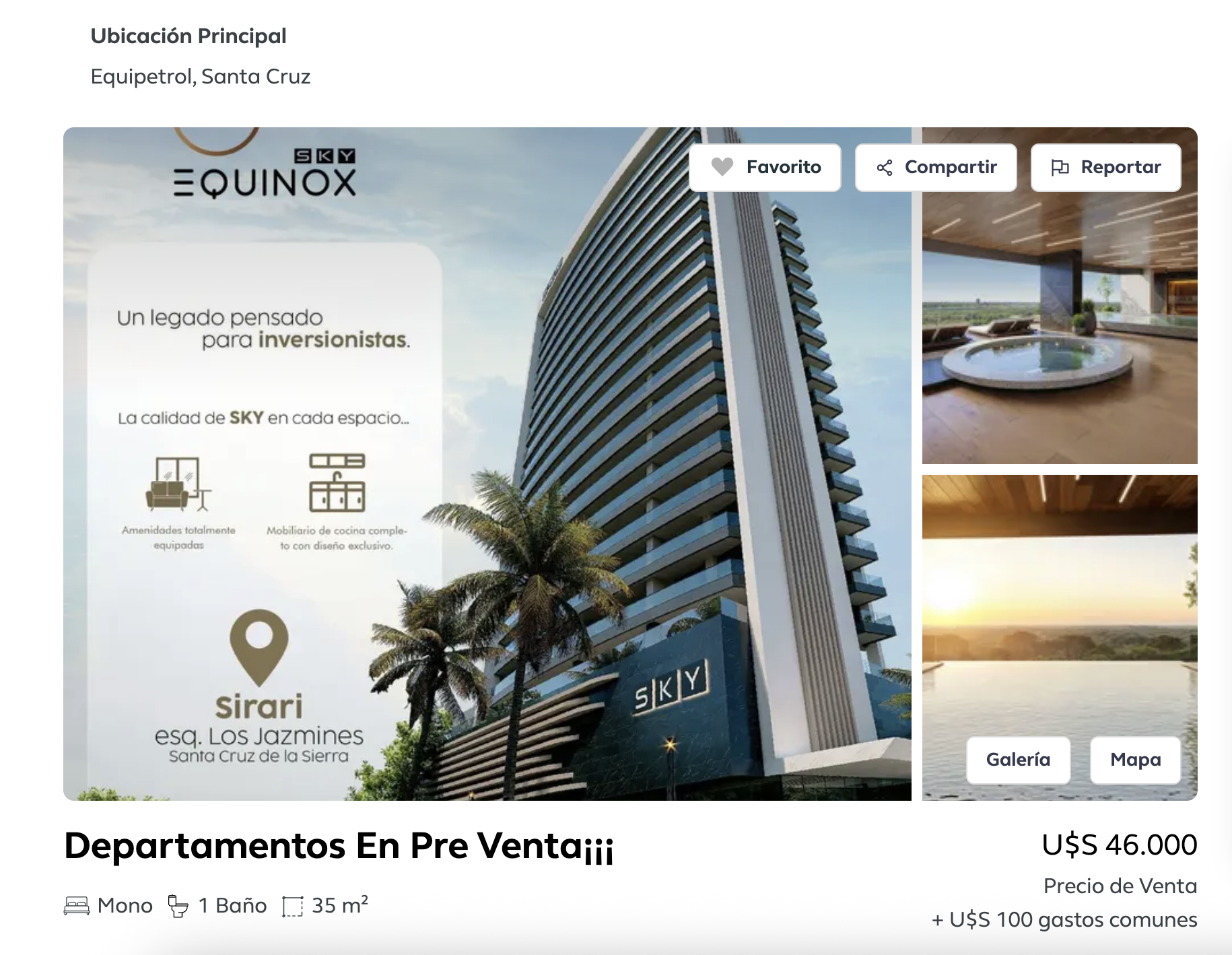
The units I toured in person started around $40,000 on a similar model: buy early in the build and pay cash for the pre-construction discount. Portal asking prices also run above what deals close at, because there’s no MLS and sellers anchor high for negotiating room.
One line item nobody mentions until closing: HOA fees. The Sky Equinox listing carries $100 a month in gastos comunes, which is typical for the new towers with pools and gyms. Sounds trivial against a $46,000 purchase. It isn’t. On a studio renting for $450 a month, that fee eats more than a fifth of your rental income, and it drags your gross yield from roughly 12% down to 9%. Two and a half points of return, gone to the pool and the gym. Price it in before you buy, not after.
Potential ROI
Run those prices against sub-$500 monthly rents and you’re penciling 8 to 10% gross before costs on the cheaper units. That unglamorous long-term math is the entire core of the Santa Cruz case.
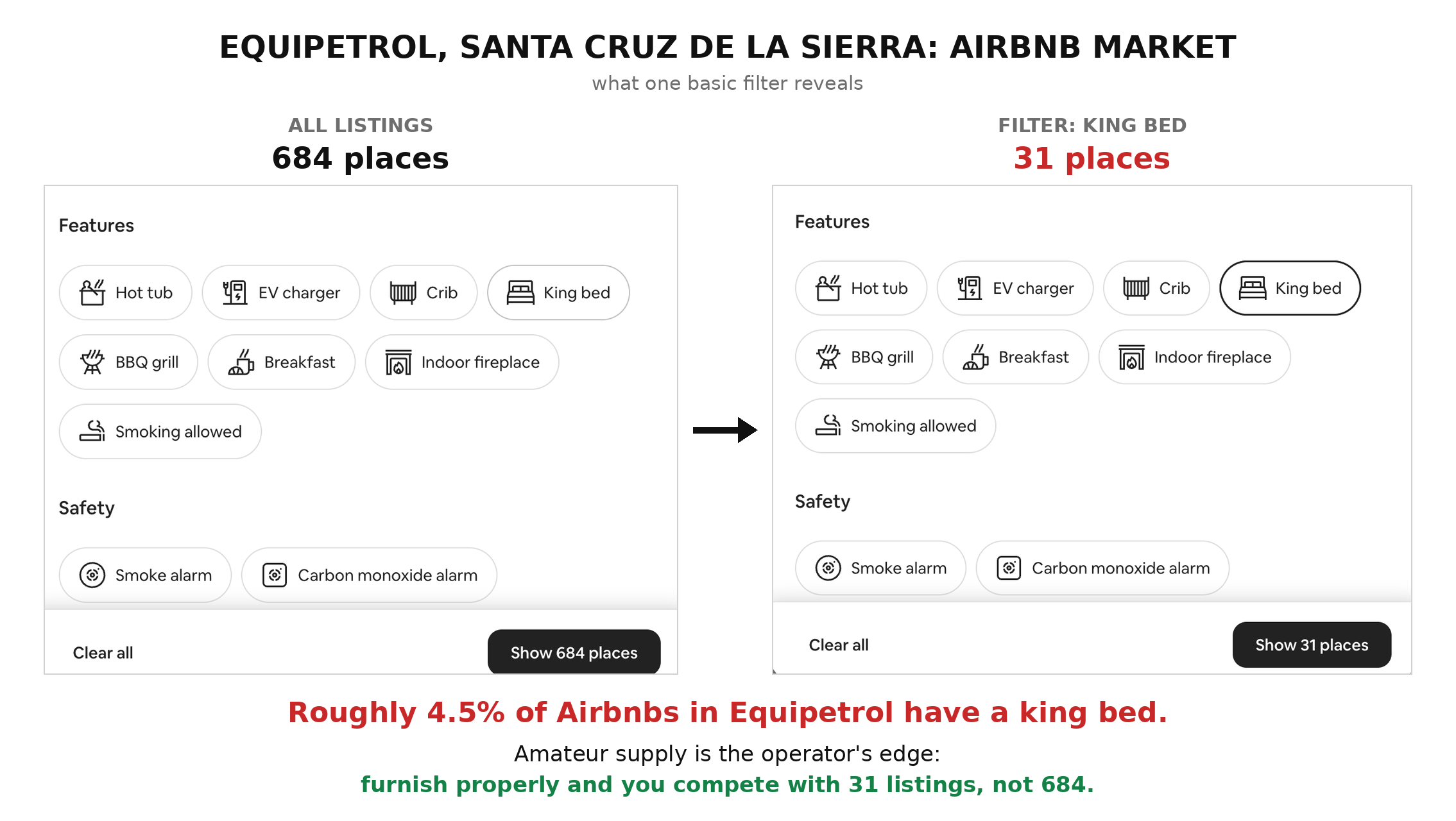
Because here’s what the short-term rental data actually shows, and I pulled it rather than guessing: about 1,800 active listings citywide, a $34 average nightly rate, 30% occupancy, and average revenue near $2,200 per year.
Run that against the $46,000 studio and the average Airbnb here returns under 5% gross, before cleaning, utilities, and furnishing. The average Airbnb here is a hobby, not an investment. A long-term tenant literally pays you more.
The exceptions are real, and the math flips hard when you hit them: top-quartile listings run 52% occupancy or better, which pencils to $6,000-7,000 a year, and the furnished monthly-stay model in Equipetrol at $400 to $800 lands in the same range. That’s 13 to 15% gross on the same $46,000 unit, aimed at the remote workers and business travelers already booking there.
You can see the demand tier yourself on Airbnb. The gap between 5% and 14% isn’t the market. It’s the operator. Guests skew Bolivian and American, and regulation is essentially nonexistent for now, with zero licensed listings in the data. Buy the unit that works as a long-term rental. If you can run a proper furnished-monthly operation on top, that’s where the outsized returns hide.
Amenities Are Required
Amenities are going to matter here. You need a rooftop pool and a decent gym at minimum. A sauna would be an added bonus.
On top of that, I’d want a balcony with some type of front facing view from a mid-to-high floor. Inside the unit, I’d want a full washer and dryer, king sized bed, fancy coffee bar, and an elite workstation – ideally standing/sitting desk with a nice chair.
I would even offer included maid service once a week (your cost would be $20 per week for this).
If you’re going to play the short term game in the Santa Cruz de la Sierra real estate market, you’re going to need great amenities inside and outside the unit + strong design features.
All that being said, it’s a winnable game. Bringing western-style Airbnb design and management to this market will 100% help attract foreigners spending some time in the city.
Just look at this:
Purely Hypothetical Scenario
Built from the real numbers above + what I toured on the ground.
You buy a pre-construction studio from a good developer in Equipetrol for $55,000. Closing costs, furniture, and a proper design job adds another $10,000.
All-in: $65,000, paid in cash, plus about twelve months of waiting while the tower goes up. That waiting period is part of the price. Your money earns nothing while cranes do their thing.
Then the unit goes live, and you have two ways to run it.
The low-effort path: furnished monthly stays at $700, which grosses $8,400 a year, or 12.9% on your $65,000.
The operator path: nightly at $45 with 60% occupancy, which grosses $9,855, or 15.2%.
Subtract reality from either one. HOA takes $1,200 a year. Utilities and wifi on a furnished unit, call it $900, and the Airbnb route adds another $500 or so in platform fees and supplies. You land somewhere between $6,300 and $7,300 net if you self-manage, a 10 to 11% return. Hand it to a property manager and give up another point or two.
One thing before you screenshot this:
$45 a night at 60% occupancy is top-tier execution in this market, remember, the average listing does $34 at 30%. Manage this exact unit like an average operator and you’re back at $2,200 a year, a 3.4% return, and a boring tenant would have beaten you without lifting a finger.
That’s the real shape of this deal: a boring long-term tenant as the sturdy floor around 8 to 10% gross, nightly done well as the 15% ceiling, and the distance between them is entirely you.
And the structural quirk that shapes everything…
This market barely uses mortgages. Transactions are cash. That does two things at once, suppressing prices and preventing the leverage-driven bubbles that inflate every hot market you’ve been priced out of.
It also thins your competition to people who, like you, can write a check. Every distortion in that sentence favors a cash buyer.
P.S: you’ll find better options working with a local realtor in this market than scrolling online portal listings…
One realtor I met and filmed content with while in Bolivia was Ariel Hubsch. Highly recommended.
You can get in touch with him here.
The Traps | What Can Go Wrong with Santa Cruz de la Sierra Real Estate
Every guide selling you on a market should also tell you how to lose money in it.
Here’s how people lose money with Santa Cruz de la Sierra real estate:
→ The sobreprecio
The custom that gives this guide its warning label.
It’s common in Bolivia for the deed to declare a lower price than what you actually paid, with the difference handed over outside the paperwork. Sellers push for it because a lower declared price means lower transfer taxes and a smaller capital gain on their end.
Agree, and when you eventually sell, your official cost basis is the fake low number, so the tax bill on the gap lands on you. The defense is non-negotiable: declare the real price and eat the slightly higher closing costs. Walk from any seller who insists. The discount isn’t worth buying someone else’s tax problem.
→ Pre-construction means developer risk
The cheapest units in this market, including most of the receipts table above, are cash-paid pre-sales with delivery a year or more out. No mortgage bank is doing diligence on the developer for you, and no escrow culture protects your deposit.
If the tower stalls at floor six, there’s little recourse. Your protection is the developer’s track record, period. Visit their completed buildings and talk to owners from their last cycle. Confirm the land title is in their name.
→ There is no MLS
Every listing price is an opening offer in a market with no shared data. The same unit shows different prices on different portals, and agents only push their own inventory. Nobody can pull comps.
Price discovery is manual: check every portal and ask what nearby units closed at. Assume the ask has room built in.
→ Title diligence happens at Derechos Reales
Before money moves, a lawyer pulls the property’s folio at the national registry and checks for liens, embargoes, inheritance claims, and whether the seller owns what they’re selling. A few hundred dollars, a few days.
Skipping it is how horror stories start, especially on older Centro properties with informal title histories. New construction from established developers is cleaner, one more quiet argument for the new towers.
→ Selling takes patience
The cash-only structure that suppresses prices on your way in slows your exit on the way out. Your buyer pool is people holding $50,000+ in cash, and no mortgage market delivers fresh buyers monthly. This is a hold market. Buy assuming five-plus years, and treat any faster exit as luck.
→ The macro can still go sideways
The thesis leans on the float holding and the cleanup continuing. If the IMF deal stalls or inflation stays hot, if the coalition behind the reforms cracks, your discount gets deeper before it gets shallower.
That’s not a reason to skip the market. It’s the reason the prices are what they are. Size the bet so a three-year delay doesn’t hurt you.
Taxes, Residency, and Ownership
Here’s how things work in Bolivia:
→ Territorial taxes, for real
Bolivia taxes income earned inside Bolivia and ignores the rest. Your online business and your dividends back home sit outside the net entirely, no special regime or ruling required. Same for capital gains.
What IS taxed is income the property itself generates here, so your rental income pays Bolivian tax like any local landlord would.
→ Residency that’s cheap and easy
The path runs through what Bolivia calls a Specific Purpose Visa, the visa de objeto determinado, the official gateway into temporary residency.
Government fees run a few hundred dollars: roughly $200 for the one-year permit, $350 to $565 for the two-year, per the current DIGEMIG schedule. None of your documents need apostilles, and the background check happens locally through Interpol instead of your home country.
Solvency is a bank statement showing about $300 a month.
With a lawyer walking it through in Santa Cruz, the process runs about a week on the ground.
Two years of temporary gets you permanent, and three years total opens the citizenship track, one of the fastest anywhere.
The catch to respect: absentee residents get burned. Reported absence limits for temporary residents range from 90 days straight to six months a year, so confirm the current rule with your lawyer before treating this as a paper residency.
→ You own it outright
Foreigners hold direct freehold title, same as locals. No trusts and no local partner. None of the fideicomiso gymnastics Mexico taught everyone to fear. The one constitutional restriction is property within 50 kilometers of international borders, which matters for frontier farmland and not at all for a Santa Cruz apartment.
Most buyers at this price point hold in their personal name and keep it simple. If you’re structuring for estate planning or US reporting, that’s a conversation with your own tax professional, not a blog post.
The Bottom Line
Santa Cruz de la Sierra is a two-million-person city (or more depending on who you ask) growing like a weed, and its best neighborhood sells new studios for $40,000 and up, in a country that just voted to end twenty years of economic self-harm.
A boring tenant might pay you 8 to 10% gross while you wait for the story to play out, and the story just got its catalyst:
The peg is dead and the frozen dollars are coming back. The IMF is at the table.
The cleanup can still fail. You read the traps section, and every risk in it is real. But you’re not paying for certainty here. That’s what Asunción costs now, five years after the people who felt uncomfortable got paid for it. Santa Cruz is priced for doubt, and doubt is the discount.
Que te vaya bien,
Jake Nomada
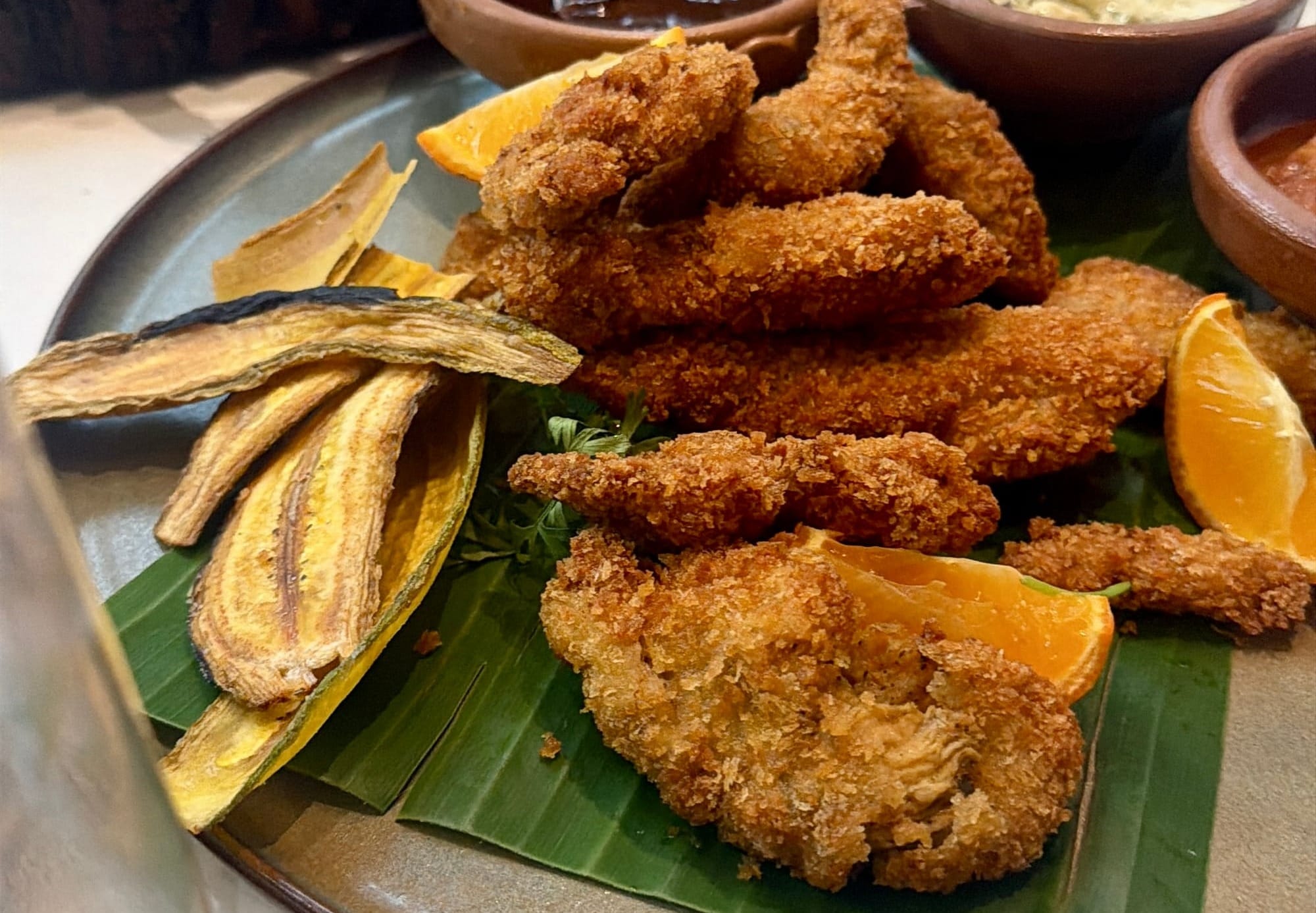
P.S. I ate fried caiman (like an alligator) in Santa Cruz. Locals call it lagarto, and it comes from Bolivia’s regulated legal harvest..